
Georgia VINE Custody Coverage
Georgia VINE is the state's public notification and current-status layer. The Georgia specific-person search lets a user look for one person by the available name or identifying details, examine a possible custody match, and open notification choices tied to that record. It can receive information from local jail systems and state correctional sources that participate in the statewide integration.
VINE and VINELink are often used as if they mean the same thing. VINE is the notification service. VINELink is the public web route used to search and manage alerts. A custody result can report an agency, location, offender identifier, and status. A release event may appear as out of custody or released when the source feed sends it. The exact fields vary because the reporting agency owns the underlying data.
The Georgia VINE person-search screen is the direct route for a named lookup.
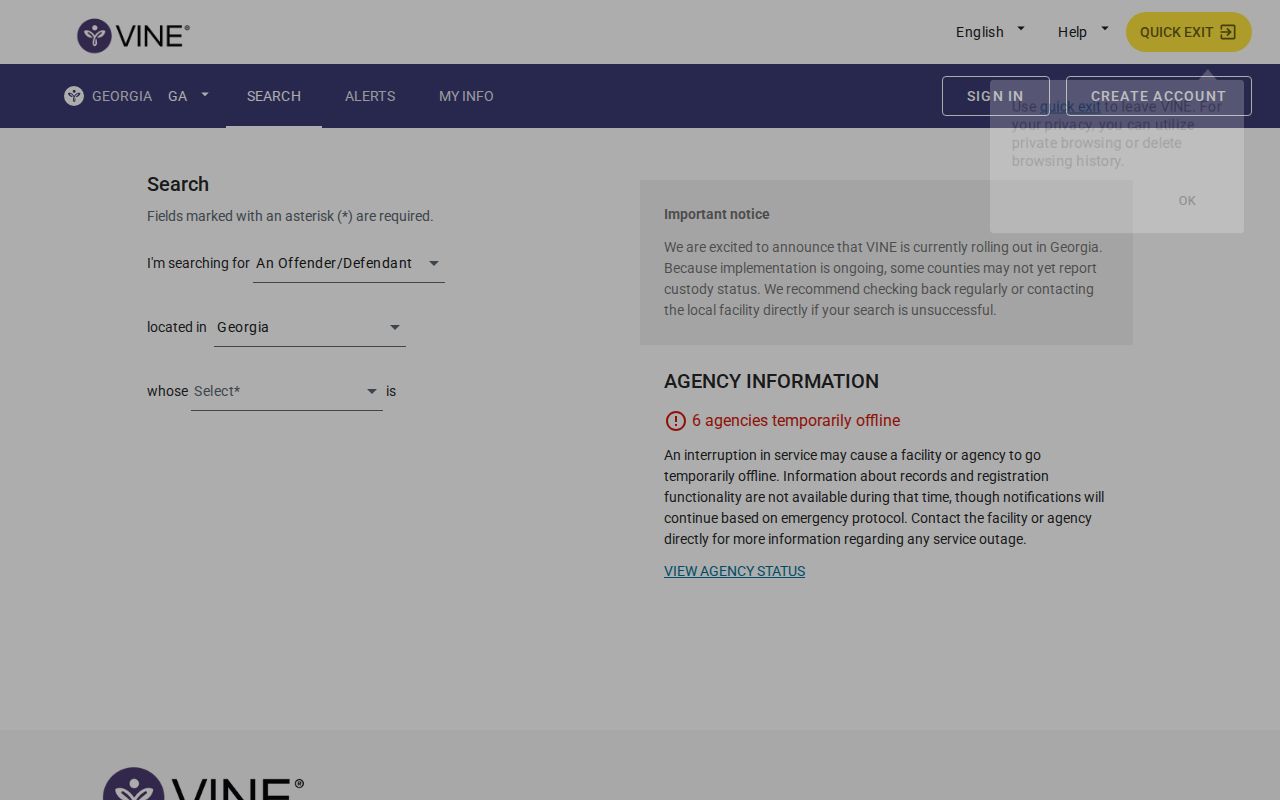
The state is already selected on that route, which helps avoid searching the wrong jurisdiction.
VINE is not a court docket and not a certified release document. It also should not be read as a full list of every person ever released in Georgia. The service is strongest for checking a current record and asking for notice when that record changes. Older releases, municipal holds, and fields from legacy county systems may not remain visible.
Search One Georgia VINE Record
Start with the person, not a broad recent-release list. Similar names are common, and an alert tied to the wrong record will not answer the release question. Gather the full name, age or birth information when lawfully known, likely county, custody agency, booking or offender ID, and approximate custody date. Use only the fields the live search offers.
- Open the Georgia person-search route and confirm that Georgia is the selected state.
- Enter the name or available identification details. Keep the first pass broad enough to catch spelling and name variations.
- Review all likely matches. Compare the reporting agency, location, identifier, age or birth detail, and custody context before choosing one.
- Open the record and copy its exact status wording. Note the reporting agency and the date or time of the last update if shown.
- Select the notification option only after the match is sound. Keep the registration confirmation and any PIN required to manage the alert.
When two records look alike, stop and verify. A county jail record and a GDC state-prison record may describe different custody events for the same person. A transfer can also create an old local entry and a newer state entry. The local exit is not proof of community release.
County jail ownership can be traced through the County Directory. Use the county's jail or sheriff record for the physical release time, release type, and destination. For a state prisoner, compare VINE with GDC. A federal case needs a federal locator.
Georgia VINELink Release Fields
Field depth depends on what the agency sends. Read the visible label instead of assuming that all records share one layout. Status is the key first field, but it needs the agency and update context. A released result can establish that the reporting custodian says its custody ended. It does not prove that all custody or supervision ended elsewhere.
| VINELink field | What it can establish |
|---|---|
| Name and identifier | Helps distinguish the selected record from similar names |
| Custody status | Shows the reporting agency's current state, such as in custody or released |
| Reporting agency | Identifies the jail or correctional source responsible for the feed |
| Facility or location | Shows the location supplied for the custody event |
| Release or change information | May show an actual or planned event when the source provides it |
| Notification options | Lists the methods offered for future record changes |
A scheduled date should not be treated as an actual exit. For a GDC prisoner, Maximum Release Date and Tentative Parole Month have distinct meanings. MRD concerns the current prison sentence calculation. TPM is a Board review marker and is not a final parole promise. VINE may relay a source update, but GDC and the Board remain the authoritative sources for those labels.
Register Georgia Release Alerts
Open the notification option from the correctly matched record. The live record controls which delivery methods and event types are available. Georgia's statewide launch described phone, web, and mobile access, along with multilingual support and continuous availability. Depending on the live choices, a registration may use phone, text, email, or another supported method.
- Choose the notification or registration control on the selected person's record.
- Select the offered custody events that matter, such as release, transfer, or another status change.
- Enter the delivery information requested by the service and complete any confirmation step.
- Create or record the PIN if one is required. Store it with the registration confirmation.
- When an alert arrives, read the event and agency name, then confirm the actual release or destination with that custodian.
A notification is only as current as its source feed. Phone service, email filters, changed contact details, and data transfer delays can affect delivery. Keep the record details so the source agency can be contacted even if an alert does not arrive. Do not register contact information for someone else without authority.
Note: Save the reporting agency, offender identifier, registration confirmation, and PIN together so an alert can be checked or managed later.
Georgia's 2024 VINE Relaunch
The Georgia Criminal Justice Coordinating Council announced statewide VINE Appriss on March 11, 2024. The announcement described real-time offender-status notifications, phone, web, and mobile access, multilingual support, and service available at all hours. It also said the system was designed to integrate with each jurisdiction's existing systems.
That integration model explains two facts at once. Georgia has a statewide notification route, yet the depth of a county record can still differ. One jail may send a rich set of fields, while another sends only a smaller status record. Historical visibility may also vary. Older county material that names a former vendor may predate the statewide launch, so the current Georgia VINE route should be checked before relying on old directions.
The CJCC statewide launch notice documents the relaunch and its integration model.
The DCS field-office directory illustrates the next agency layer that may matter after a custody release.
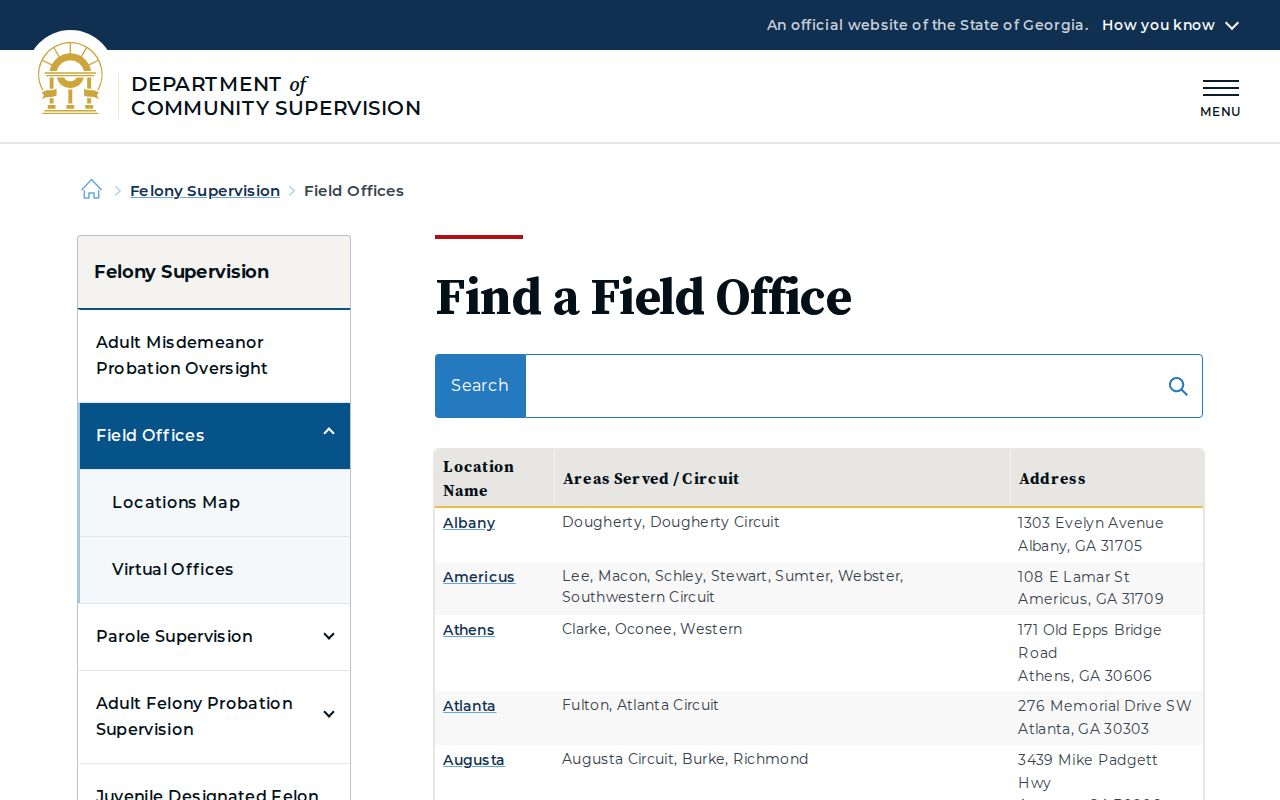
After custody ends, a separate agency such as DCS may hold the current supervision record, so release status and supervision status must not be merged.
Confirm Georgia State-Prison Release
For a person who served a Georgia state-prison sentence, confirm VINE information through the Georgia Department of Corrections. The GDC Find an Offender form can search active offenders, inactive offenders, or both. Its sentence-status menu also includes Released In The Past 15 Days. A detail record may show CURRENT STATUS: INACTIVE and an ACTUAL RELEASE DATE.
The GDC search disclaimer and form show why the state record is the right check for a GDC release.
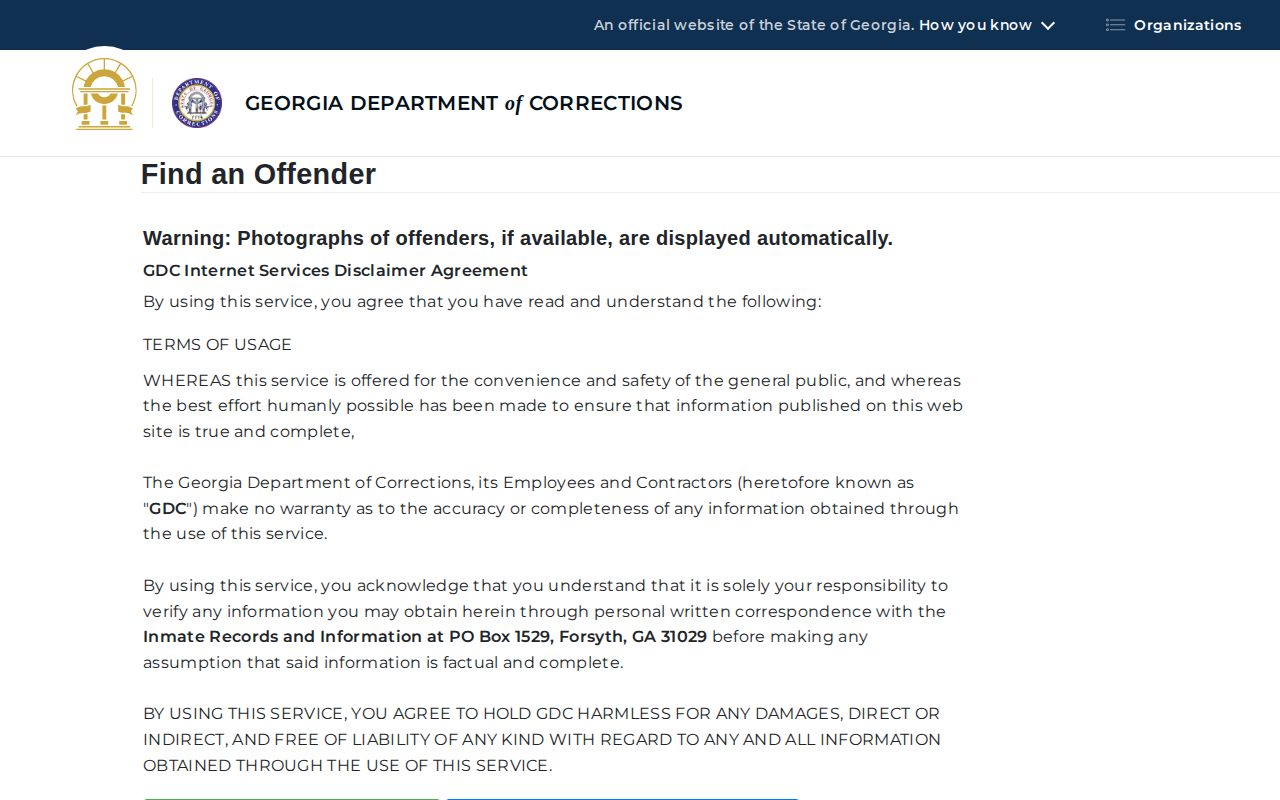
An inactive GDC result means not currently incarcerated in the GDC search scope. It does not automatically mean all supervision ended.
If parole follows, check the Board's Parolee Database. If probation or another community-supervision term is at issue, consult the sentencing court and the Georgia Department of Community Supervision. DCS has a statewide field-office directory but no general public person-by-person probation locator comparable to GDC's search. A discharge or completion order is stronger proof that supervision ended than a custody release alert.
Georgia VINELink Limits and Fallbacks
VINELink does not replace the Federal Bureau of Prisons Inmate Locator. BOP covers federal inmate records from 1982 onward. Its result may state Released or Not in BOP Custody and may provide a release date. BOP warns that the phrase means only that the person is no longer in BOP custody. Another correctional, law-enforcement, parole, or supervised-release status can still exist.
The BOP Inmate Locator is the correct federal fallback when Georgia VINE has no federal record.
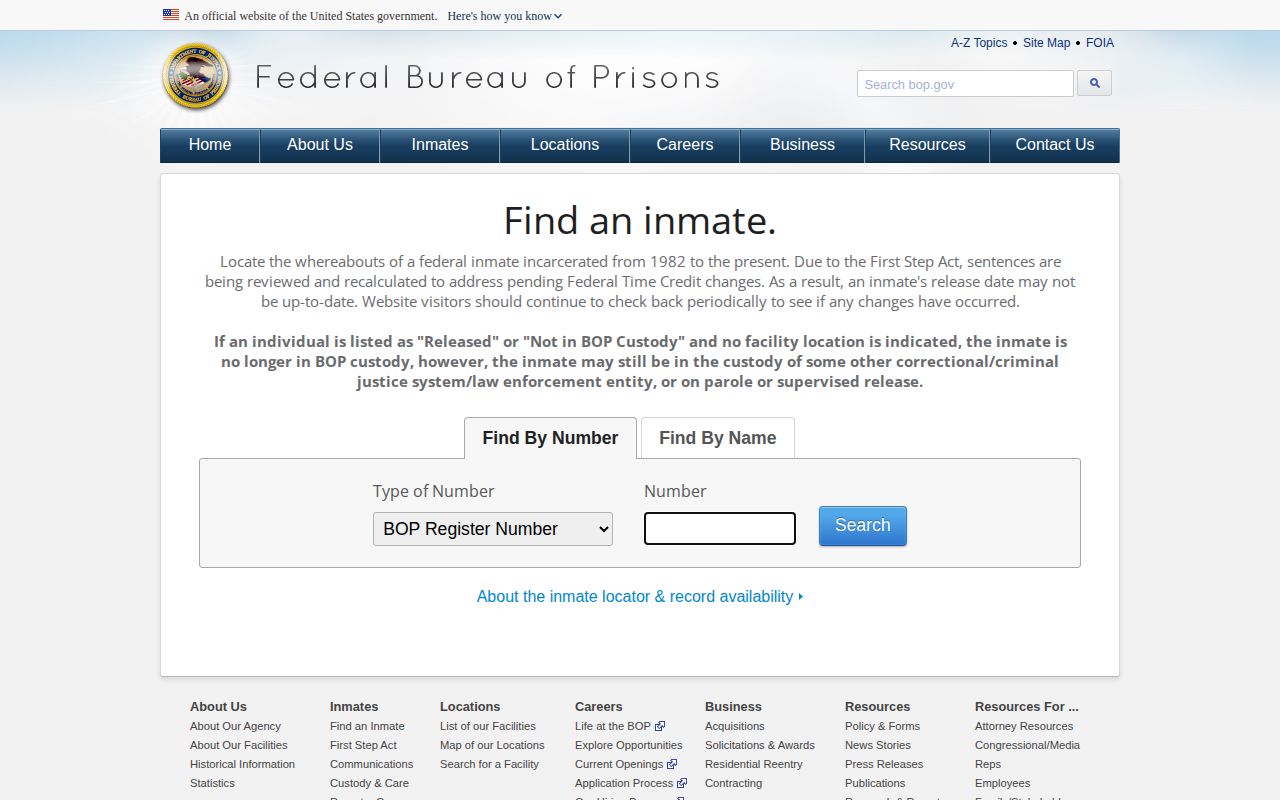
Federal pretrial custody may not produce the same BOP record, so the court and responsible federal custodian may also be needed.
ICE's Online Detainee Locator System is a separate, narrow tool when immigration detention is genuinely relevant. It searches by A-number and country of birth or by exact name and country of birth. ICE says it includes current detainees and people released from ICE custody within the past 60 days. That short window is not a Georgia jail-release archive.
A missing VINE result has several possible causes: a spelling mismatch, a record under another name, an agency feed delay, a county-only historical event, a municipal hold not exposed in the same way, or an old release outside public visibility. First check the source agency. Then review the court record for a bond order, dismissal, sentence, revocation, or discharge. The court can explain why custody changed, while the jail or prison record supplies the physical release time and destination.
If VINE and the agency portal conflict, preserve both exact statuses and their update times. Check whether one result describes a past facility while the other names a receiving custodian. A transfer often explains what looks like a false release. For a true community exit, ask the former custodian for the release date and time, release reason, legal authority, and destination.
Do not treat a silent alert as proof that no change occurred. Feed transmission, contact delivery, or record matching can fail. Reopen the saved record, check the official jail or GDC search, and contact the custodian when the event is imminent. A current agency response has more weight than an old notification.
The Georgia Courts eAccess hub routes users toward participating court systems when a custody result needs a case disposition.
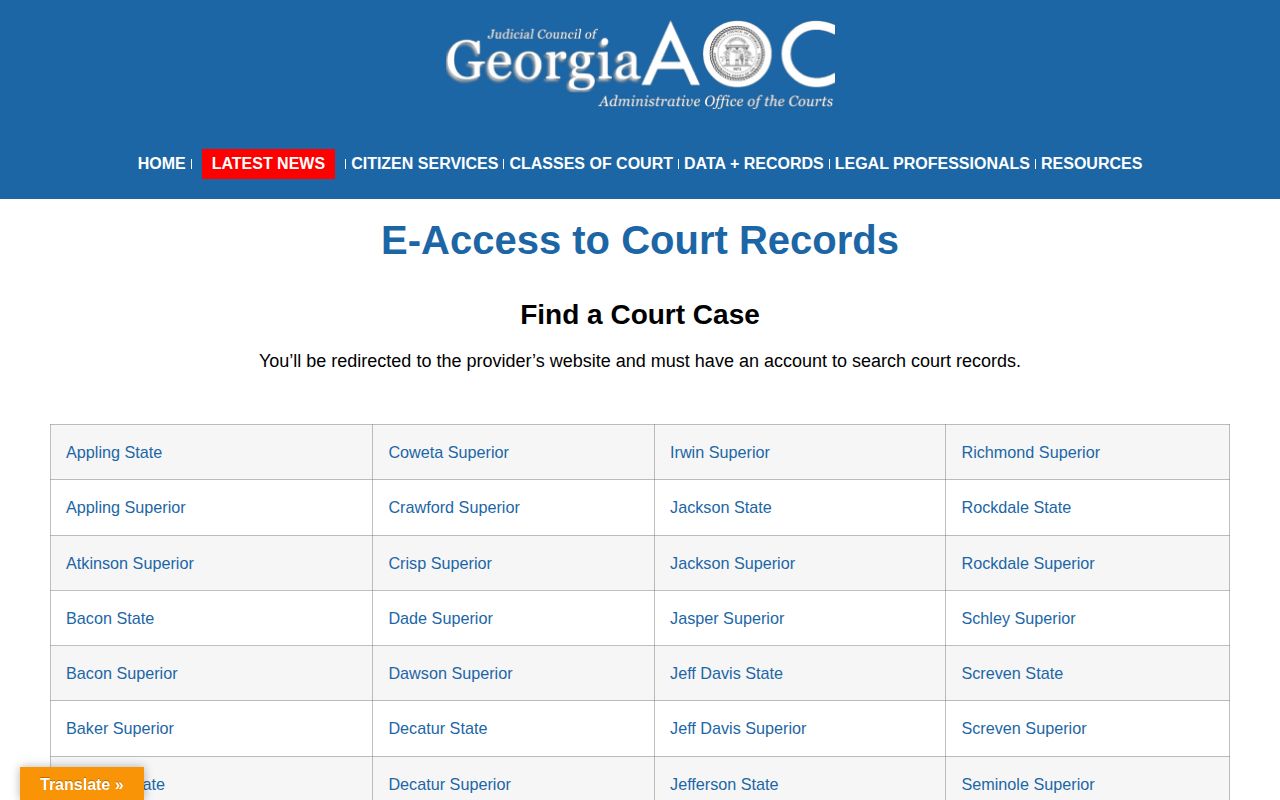
Online court access varies, so a missing order may require a request to the clerk that handled the case.
For a durable release record, ask the correct custodian for the booking or offender ID, admission date, release date and time, release type, authority, and destination. The broader Georgia released inmates search path separates county jail, GDC, court, BOP, and ICE records. That separation prevents a current-status alert from being stretched beyond what its reporting agency actually says.
Record the reporting agency and the time checked. Those two details make a later status change easier to trace and confirm.