
GDC Georgia Release Authority
The Georgia Department of Corrections, or GDC, operates the state prison system and maintains the statewide offender data used for people who served Georgia prison sentences. Its public Find an Offender application is the primary online starting point for a released or discharged state prisoner. It is not a universal jail roster. A person held only by a sheriff or municipal jail may never enter GDC custody, even when the charge is a felony. That historical release remains with the local jailer and the court.
A county transfer creates another common source of error. When a person leaves a jail for a GDC institution, the county roster may drop the name. Custody continued. GDC then becomes the state-prison source, and the county record should identify the transfer rather than a community release. The official GDC home page confirms the agency identity and links its offender information.
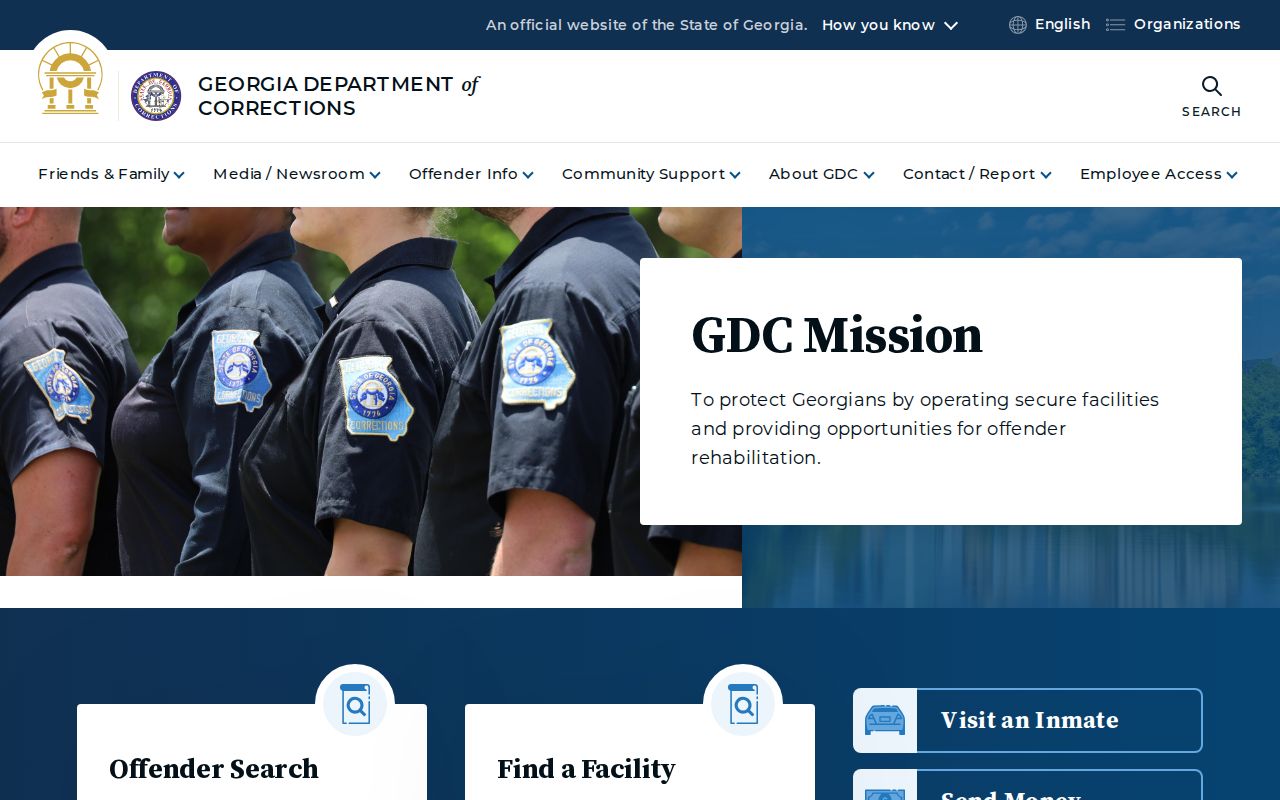
The agency layer shown there must be matched to a state sentence, not assumed from a county arrest alone.
Use the GDC Offender Search
The official GDC offender search opens with a disclaimer. After accepting it, search by a partial first and last name, GDC identification number, or case number. A GDC number is the strongest starting key when known because names can repeat. The detailed form also offers gender, race, age range, most recent institution, alias, middle name, physical descriptors, scars or marks, sentence status, primary offense, conviction county, and photo preferences.
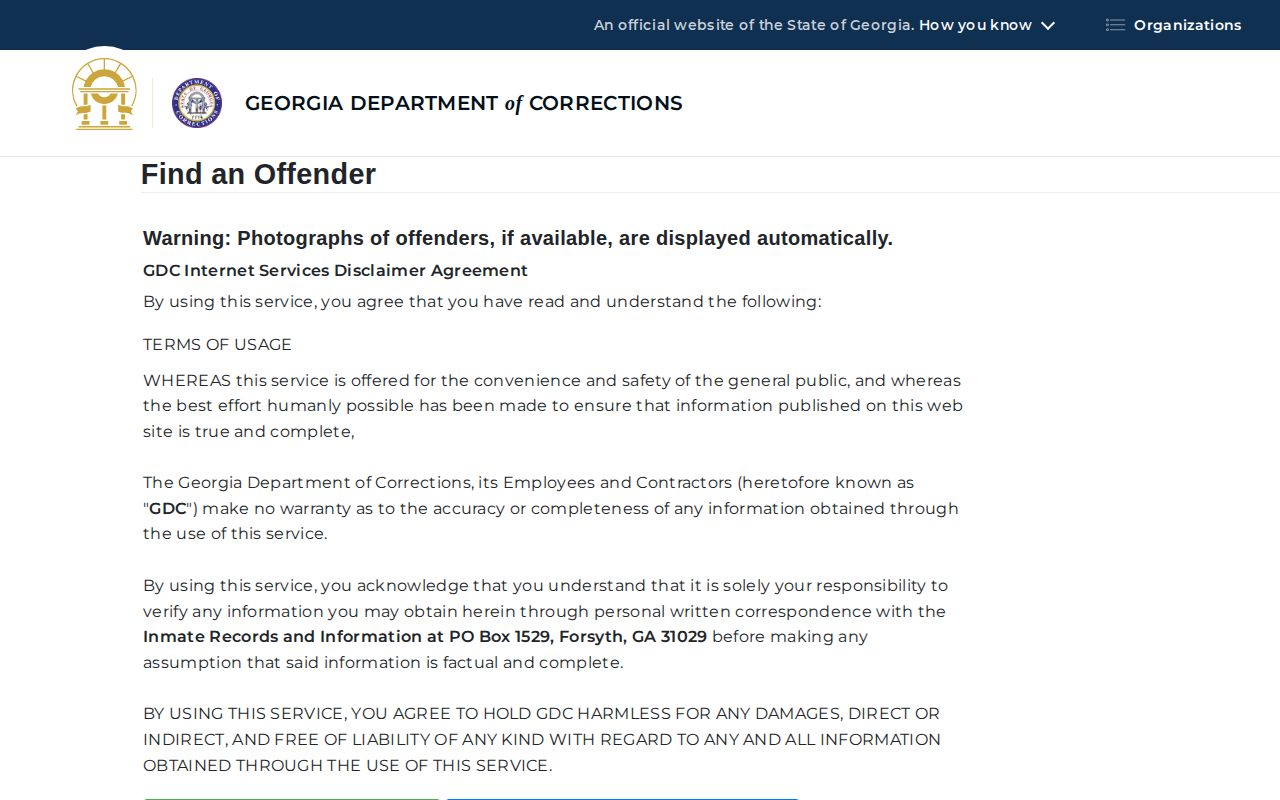
The form’s custody scope controls whether inactive released profiles appear in results.
- Accept the disclaimer and choose the search form that fits the known identifiers.
- Enter the GDC number when available, or use a name and a useful secondary field.
- Select “Only Inactive Offenders” when the person is believed to have left GDC incarceration, or select both active and inactive when status is uncertain.
- Open the detail and compare birth date, physical description, conviction county, case, offense, and institution before matching the person.
- Record the exact current-status, actual-release, maximum-release, and parole labels, then verify significant facts with GDC records.
GDC recommends entering the first four letters of the surname and selecting all offenders when a record is hard to locate. The sentence-status menu also includes “Released In The Past 15 Days.” Its prospective counterpart, “Max Prison Term Ending Next 15 Days,” concerns a maximum sentence date and is not a list of completed releases.
Read GDC Inactive Results
An inactive result uses a narrow system meaning: the person is not currently incarcerated within GDC’s active scope. Research captures show the labels CURRENT STATUS: INACTIVE and a populated ACTUAL RELEASE DATE. The Important Release Information area may also show MAX POSSIBLE RELEASE DATE and TENTATIVE PAROLE MONTH. Sentence and incarceration sections can add case number, offense, conviction county, institution, and begin or end dates.
Do not rewrite “inactive” as “all obligations completed.” A person may leave prison on parole, a conditional transfer, a supervised reprieve, a court action, or a maxout with probation to follow. DCS can supervise the person after GDC incarceration ends. Compare the public detail with the Parolee Database, the sentencing court, and DCS when present supervision matters. An active detail can instead show CURRENT STATUS: ACTIVE and ACTUAL RELEASE DATE: CURRENTLY SERVING.
| GDC field | How to read it |
|---|---|
| GDC number | The correctional identifier used to separate similar names |
| Current status | Active or inactive within GDC incarceration scope |
| Actual release date | The recorded date of a completed GDC release action when populated |
| Max possible release date | The maximum prison-sentence calculation, not proof of parole |
| Tentative parole month | A prospective Board review marker, not a promised release date |
| Most recent institution | The last reported GDC placement, not necessarily a release destination |
Inactive is not discharge. Confirm parole, probation, warrants, and later orders through the agency that controls each status.
Missing GDC Released Records
Many inactive records remain searchable because the application expressly supports inactive and all-offender scopes. GDC does not publish a universal number of years that every inactive profile stays online. The agency also states that a person’s record is not published after completion of a sentence under Georgia’s First Offender Act. Other juvenile, protected, or nonpublic material can be unavailable.
A blank result has several possible explanations. The spelling or filter may be wrong. The person may have had only county custody. The record may fall outside public publication rules, or the event may require an underlying records request. Try the surname technique and both-status scope, then compare the county and court sources. Never treat absence from the public GDC tool as proof that a person was never confined or that all supervision ended.
GDC Release Date Labels
Georgia uses three date concepts that must remain separate. The Maximum Release Date, or MRD, is tied to the court-imposed sentence and represents the longest prison term under the current calculation. The Tentative Parole Month, or TPM, is the month when the State Board of Pardons and Paroles expects final review and may establish a parole release date. The Board says a TPM is not a final decision. Performance Incentive Credit, or PIC, can move an eligible TPM or MRD, but it is not a date label and does not guarantee release.
GDC’s family release-date guidance directs users toward the offender information system for location, charge, and release-date details.
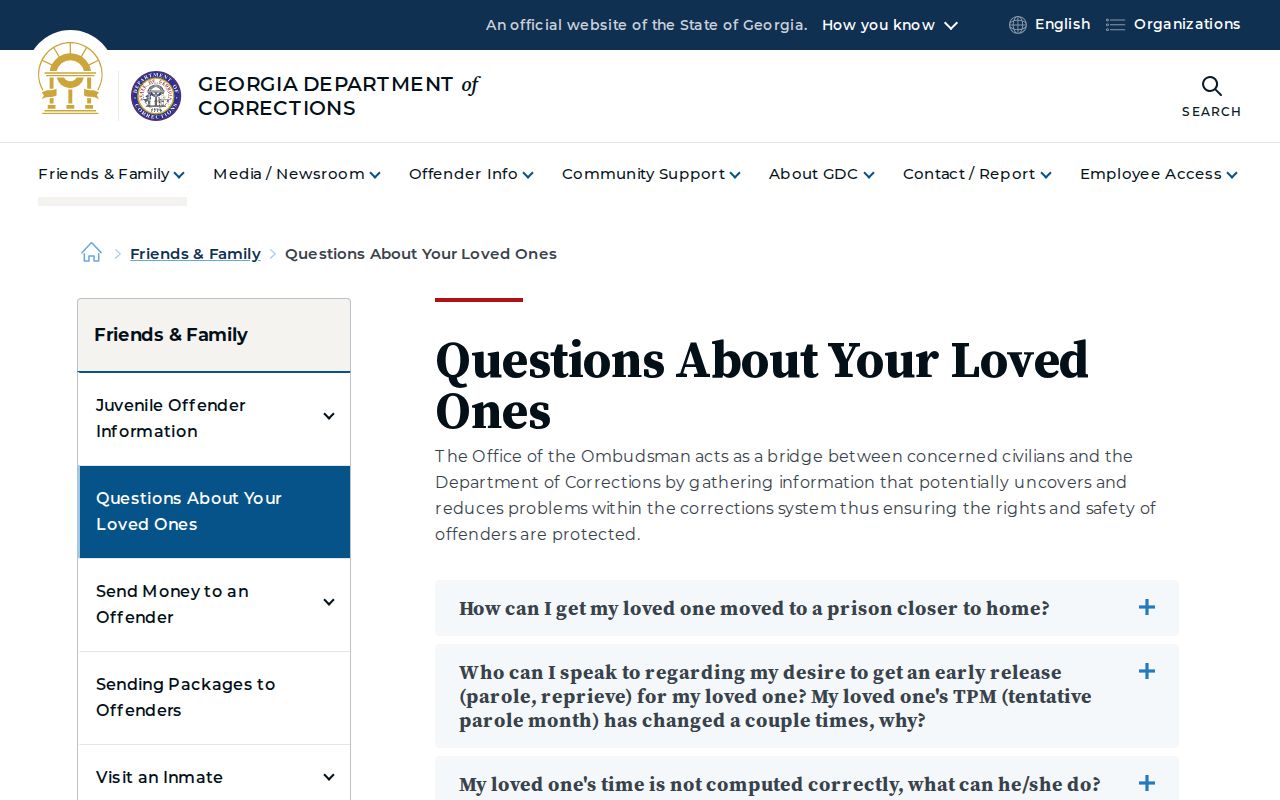
The online date should be recorded with its label and check date, then confirmed when an imminent release depends on it.
The Board’s TPM information page explains the separate parole-review marker.
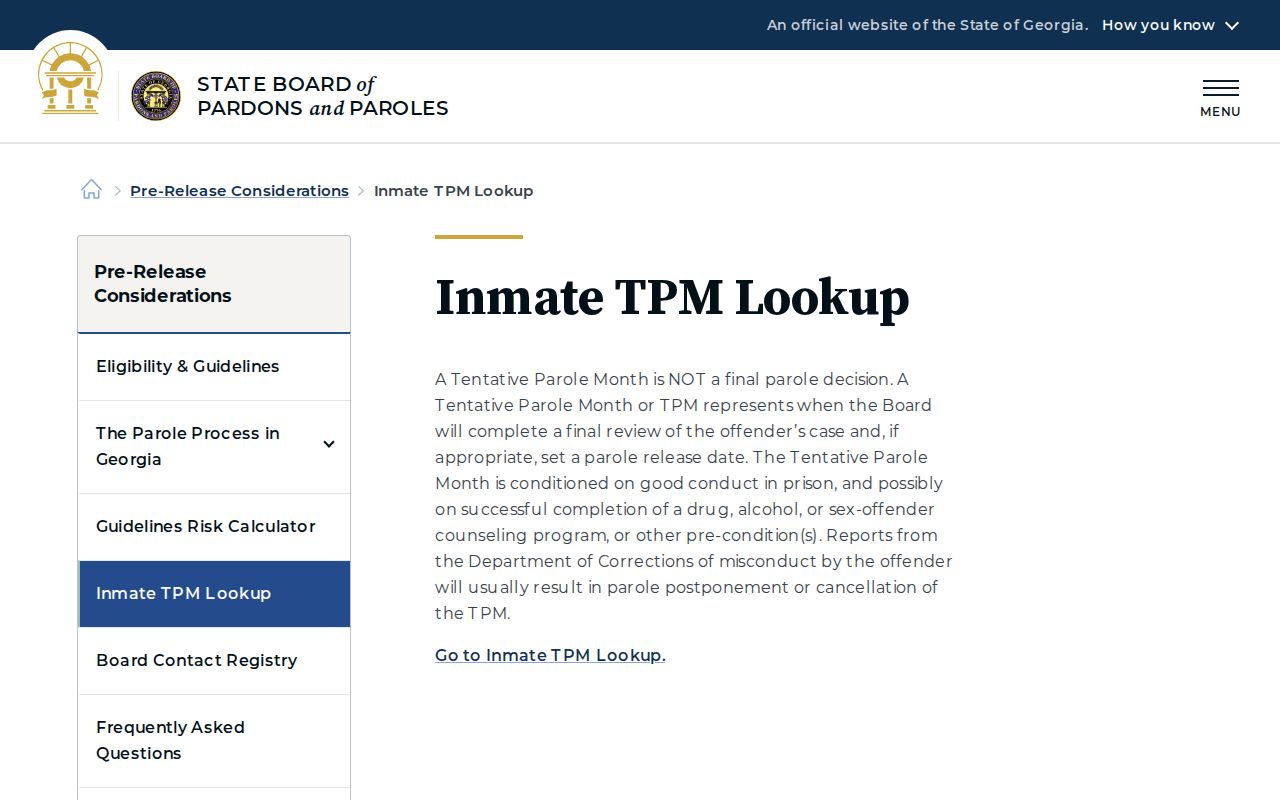
A TPM can change before release due to conduct, program requirements, residence review, detainers, or new case information.
GDC Release and Discharge
Parole, maxout, and discharge answer different questions. Parole is a discretionary Board action that permits supervised community service of part of an eligible prison term. A maxout follows service to the maximum of the prison sentence under the valid calculation. Discharge generally documents the final end of the applicable sentence or supervision duty. County bond, recognizance, dismissal, time served, and local-sentence completion belong to a different jail and court framework.
Most eligible GDC prisoners do not submit a parole application. The Board says it automatically considers those who are eligible. Investigators assemble legal and personal-history material, and the Board reviews GDC conduct, programs, and institutional information. For a non-life sentence, it may set a TPM or deny parole and may reconsider before release. A residence plan, program condition, misconduct, detainer, or new information can affect the result.
- Parole
- Conditional release from prison while part of the term remains under supervision.
- Maxout
- Release when the calculated maximum prison term has been served.
- Discharge
- Final documented completion or termination by the responsible authority.
- Detainer
- A request or legal hold that may cause another agency to take custody.
GDC PIC Release Credit
Georgia does not use one simple modern good-time subtraction for all state prisoners. O.C.G.A. § 42-5-100 ended the former general earned-time authority, while older entitlement and separate work-incentive rules have their own scope. The current public-facing program is Performance Incentive Credit. It rewards satisfactory progress in approved programs, work assignments, and behavior for eligible offenders.
The official GDC PIC explanation states that eligible offenders can earn up to 12 points, potentially moving a TPM or MRD by one to twelve months.
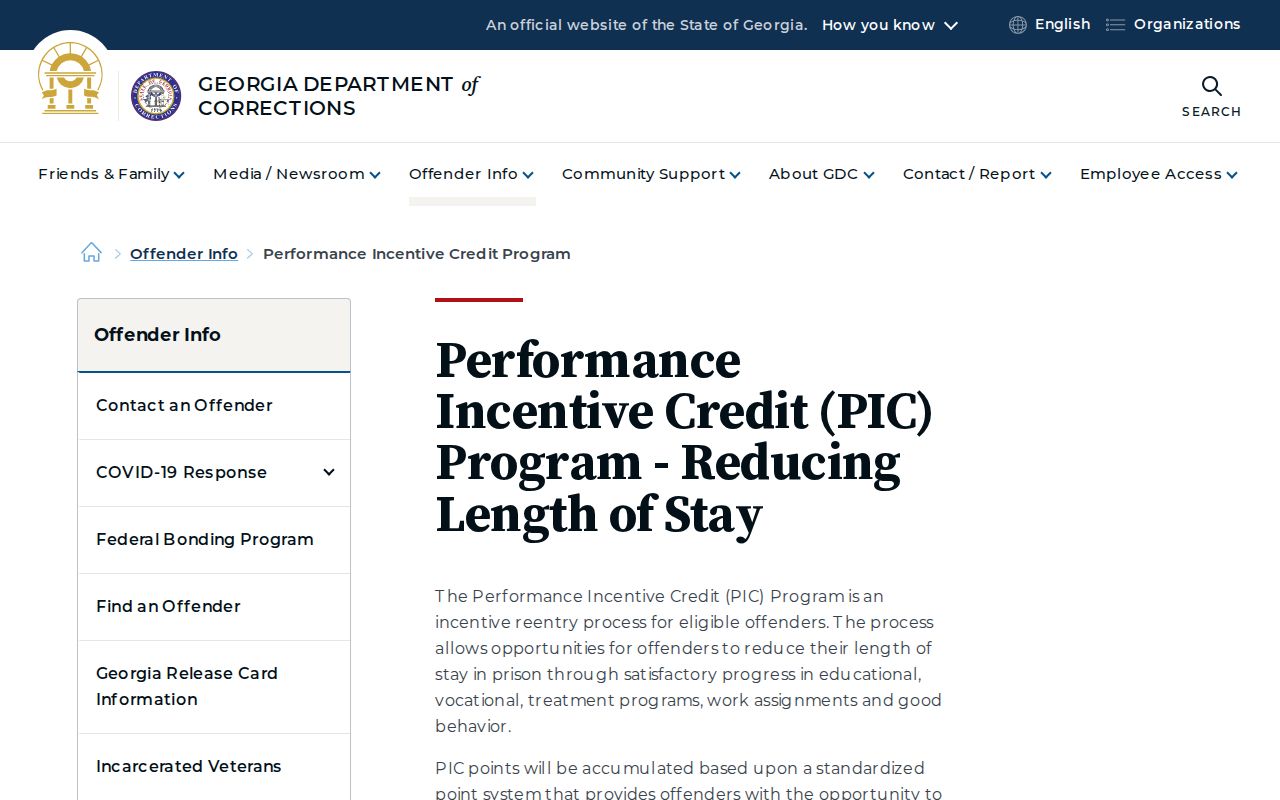
Sentences of two years or less, non-parole-eligible or minimum-mandatory offenses, and life sentences are among the stated exclusions, and points still do not promise release.
O.C.G.A. § 17-10-6.1 separately governs listed serious violent felony sentences. County earned time comes from O.C.G.A. § 42-4-7 and is calculated by the local jail and sentencing court, not through GDC’s MRD or PIC system. Corrected sentence information, jail credit, concurrent or consecutive treatment, interruption of service, discipline, court orders, parole action, and detainers can change a projected date.
GDC Georgia Release Trends
The FY2025 GDC release profile counted 13,523 administrative release records: 7,640 sentence expirations, 4,033 parole certificates, 707 conditional transfers, 408 supervised reprieves, 282 out-of-state parole orders, 128 out-of-state conditional transfers, and 325 deaths. The data cover July 1, 2024 through June 30, 2025. Because the statistical definition includes transfer and death categories, the total must not be described as the number of people who simply returned to the community.
GDC’s August 7, 2026 Friday Report counted 1,185 July releases. It grouped 539 as clemencies, 611 as maxouts, and 35 as other, with 1,083 classified as supervised. The weekly warehouse report can change as recent data settle. The Friday Report archive is the current trend source, while annual calendar-year and fiscal-year profiles support longer comparisons.
| Period | Reported records | Reading note |
|---|---|---|
| FY2025 | 13,523 | Multiple administrative release types, including transfers and deaths |
| July 2026 | 1,185 | As reported August 7, 2026; recent warehouse totals may settle |
GDC Georgia Release Card
GDC uses a Georgia Release Card to transfer money left in an inmate account at release. The agency’s Friends & Family guidance describes remaining funds “on your books” moving to the card, and its dedicated page gives activation and account directions. The source does not establish a universal fixed gate-money payment, clothing package, or bus ticket for every released prisoner.
Check the Georgia Release Card information for current steps. The card documents how existing account funds are disbursed. It should not be described as a separate cash grant. Transitional centers and work-release placements also remain correctional placements until the actual authorized release action occurs.
GDC Versus Georgia Jails
The GDC offender search covers sentenced state prisoners. A sheriff’s release record covers a local arrestee, pretrial detainee, person released on bond, or local sentence. The correct choice depends on who held the person at the end of the event. A GDC institution may sit inside a county, but its state-prison releases still belong to GDC. A county correctional institution can require closer review of the actual custodian and sentence.
| Question | GDC state prison | County jail |
|---|---|---|
| Who is covered? | Sentenced state prisoners | Local arrestees, pretrial detainees, and some local sentences |
| Primary online source | GDC offender search | County roster or release source, when published |
| Historical proof | GDC release action and records response | Jail release log and court order |
| Transfer meaning | May show a change of institution | May mean custody moved to GDC or another agency |
Use the Georgia County Directory for the local side. It routes to each county’s dedicated release sources instead of treating GDC as a statewide substitute for sheriff records.
Request GDC Release Records
For a certified or underlying record, submit a focused request through the GDC Open Records Request page. Identify the person by full name, GDC number, date of birth if known, case or conviction county, and approximate custody period. Ask for public portions of admission, sentence computation, institutional history, release action, actual release date, release type, destination, and supervision status that fit the inquiry.
O.C.G.A. § 50-18-71 generally requires a response within three business days. When production cannot occur in that time, the agency response should describe the records and give a timetable and cost estimate. Authorized search, retrieval, redaction, and copying fees may apply. Medical, security-sensitive, victim, confidential parole-file, and other exempt information can be redacted or withheld. Asking for segregable public portions is more useful than demanding an unlimited institutional file.
Verification path: Match the public inactive detail to the GDC records response, then check the Parolee Database, DCS, or court when supervision may remain.
GDC Georgia Release Facilities
GDC custody spans state prisons, reception and diagnostic functions, medical institutions, probation detention centers, integrated treatment facilities, and transitional centers. County correctional institutions and privately operated state facilities add another layer. The physical county does not decide which released-person database controls. A person serving a GDC sentence remains in the state correctional record even when housed in a facility with a county name or a private operator.
Transitional centers are still correctional placements. They may support work-release or pre-release activity, but arrival there is not final discharge. The State Board may make completion of a GDC program a parole condition, while GDC controls placement. Confirm the later release action through the offender detail and agency record. The statewide Georgia Facility Directory separates covered county, GDC, federal, and ICE locations and leaves facilities without a built local page unlinked.
Reception and transfer history also helps identify the correct record. A most-recent-institution field is an institutional clue, not a promise that release occurred at that gate or that the person went directly into the community. Ask GDC for the release action, release type, and destination if the public detail does not resolve the transition. For a county jail transfer into GDC, retain both records because the county timestamp ends local custody while the state admission begins the next custody event.
The directory also reflects facilities that have no built county page. Those entries remain plain text because an official statewide location listing is not the same as a researched local release page. Covered links lead to verified sibling files. This distinction keeps the GDC search route tied to a real institution while avoiding a false promise that every facility publishes its own inmate history or release feed.
Facility type also determines the next source. GDC records control a state-prison release. A federal institution uses BOP, and an immigration detention center uses ICE. County jail exits remain with the sheriff or jailer. Matching the operator before searching prevents a current facility list from being mistaken for a statewide historical release database.