
Georgia Projected Versus Actual Release
A projected date estimates when a custody term may end under the information now in the sentence calculation. An actual release date records an event that already occurred. Georgia adds another layer because the Georgia Department of Corrections, or GDC, and the State Board of Pardons and Paroles publish different measures. GDC uses the Maximum Release Date, often shortened to MRD. The Board uses a Tentative Parole Month, or TPM. Neither label should be casually rewritten as a guaranteed pickup date.
The MRD is tied to the court-imposed prison term and the current sentence computation. GDC's orientation material describes it as the longest prison term under that calculation and says it changes only if service of the sentence is interrupted. A TPM is a prospective month in which the Board expects to complete final review and, when appropriate, establish a parole date. The Board can reconsider a decision before release. Program completion, conduct, a residence plan, detainers, or new case information may still matter.
A pretrial detainee is different. No sentence has yet supplied a term to calculate. Bond, dismissal, plea, trial, or another court order may control when the person leaves a county jail. Even after sentencing, a transfer from a local jail to GDC is not release to the community. The destination field and receiving agency settle that distinction.
Search a Georgia Release Date
The official GDC Find an Offender form is the statewide starting point for a person serving a Georgia state-prison sentence. It is not a universal county jail roster. Search results can include active and inactive records, but the form begins with a disclaimer that must be accepted. A known GDC identification number is the strongest search key. When only a name is known, GDC recommends trying the first four letters of the surname and searching all offenders.
- Accept the official GDC search disclaimer and choose the scope that fits the question: active offenders, inactive offenders, or both.
- Enter the GDC ID if known. Otherwise use the name fields, then narrow a likely match with birth details, conviction county, case number, physical description, or most recent institution.
- Open the detail record. Copy the labels exactly, especially CURRENT STATUS, MAX POSSIBLE RELEASE DATE, TENTATIVE PAROLE MONTH, and ACTUAL RELEASE DATE.
- Check the Board's separate TPM tool if parole timing appears in the record. Do not merge the TPM with the MRD.
- For a near-term release, confirm with GDC Inmate Records and Information or the responsible records custodian because a screen result is not a certified sentence computation.
The official offender-search form shows the scope and sentence-status controls used for a Georgia projected release lookup.
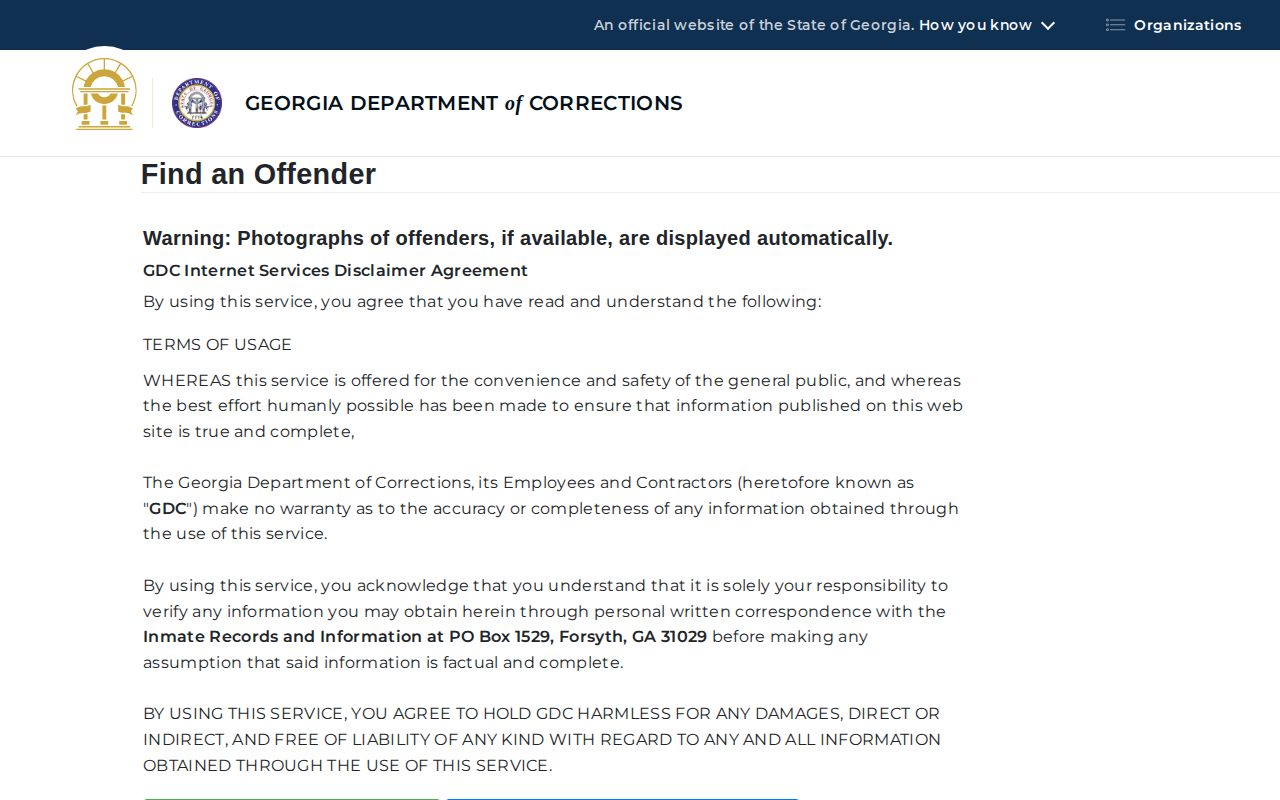
Those controls are important because an active record and an inactive released record answer different questions.
A county sentence must be checked with the jail and sentencing court instead. The statewide County Directory routes to local release-record coverage. Ask the jail for the sentence computation or release record, and use the court docket or order to confirm the sentence, jail credit, and later amendments.
Georgia Credit Rules by Custody
Georgia does not use one simple modern good-time deduction for every person in prison. O.C.G.A. § 42-5-100 and the state sentence-computation rule ended the former general earned-time authority and preserve old earned time only for people entitled under law in effect before January 1, 1984. A separate rule under O.C.G.A. § 42-5-101 permits work-incentive credit, except for life sentences, when qualifying education, work, and conduct standards are met.
The current public-facing program is Performance Incentive Credit, or PIC. GDC says an eligible offender may earn up to 12 points for approved programs, work assignments, and good behavior. One point may move a TPM or MRD by one month, so the possible movement runs from one to twelve months. PIC is discretionary and conditional. It does not promise release, and some sentence groups are excluded.
| Georgia mechanism | What it can affect | Key limit |
|---|---|---|
| Performance Incentive Credit | An eligible TPM or MRD | Not automatic; eligibility and earned points control |
| Work-incentive credit | State sentence computation | Requires qualifying attainment, work, and conduct; life sentences excluded |
| County earned time | A locally served county sentence | Separate from GDC; not automatic for sentences imposed on or after July 1, 2000 |
| Serious violent felony rule | Statutory minimum service | O.C.G.A. § 17-10-6.1 limits early release for listed offenses |
The GDC PIC explanation is the official source for eligibility, points, and possible movement of a date.
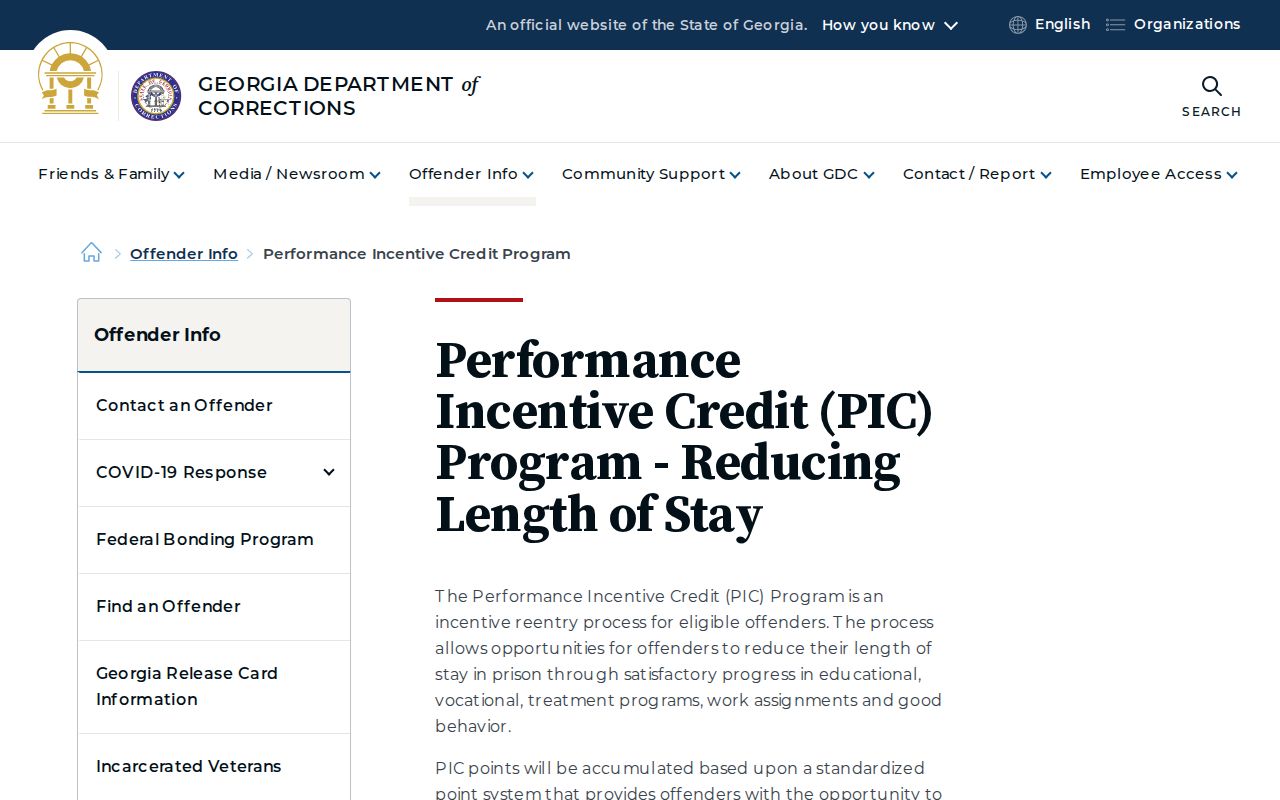
The program is best read as a possible adjustment within GDC and Board rules, not as a public calculator.
County earned time comes from a different statute. O.C.G.A. § 42-4-7 permits an allowance based on institutional behavior and directs release at expiration less valid allowance. For sentences imposed on or after July 1, 2000, the allowance is not automatic or mandatory. Local jail staff and the sentencing court therefore control that calculation.
Why Georgia Release Dates Move
A date can change because the facts in the calculation change. Corrected sentencing information and jail credit may alter the term. Concurrent sentences run together, while consecutive sentences run one after another. An interruption in service can change an MRD. Discipline or failure to complete a required program may affect PIC or parole timing. A detainer can prevent a planned community release by sending the person to another custodian.
| Change | Possible effect | Where to verify |
|---|---|---|
| Corrected court order or jail credit | Moves the sentence calculation | Sentencing court and GDC or local jail |
| Concurrent or consecutive treatment | Changes how terms combine | Court order and sentence computation |
| Discipline or program status | May postpone or cancel credit or a TPM | GDC and Parole Board |
| Parole grant, denial, or reconsideration | Can set, delay, or remove prospective parole timing | TPM Lookup and Parole Board |
| Detainer or receiving-agency hold | May produce a transfer instead of community release | GDC, jail, court, or receiving agency |
The Board's parole-process explanation shows why review, conduct, programs, and an approved residence plan can affect release.
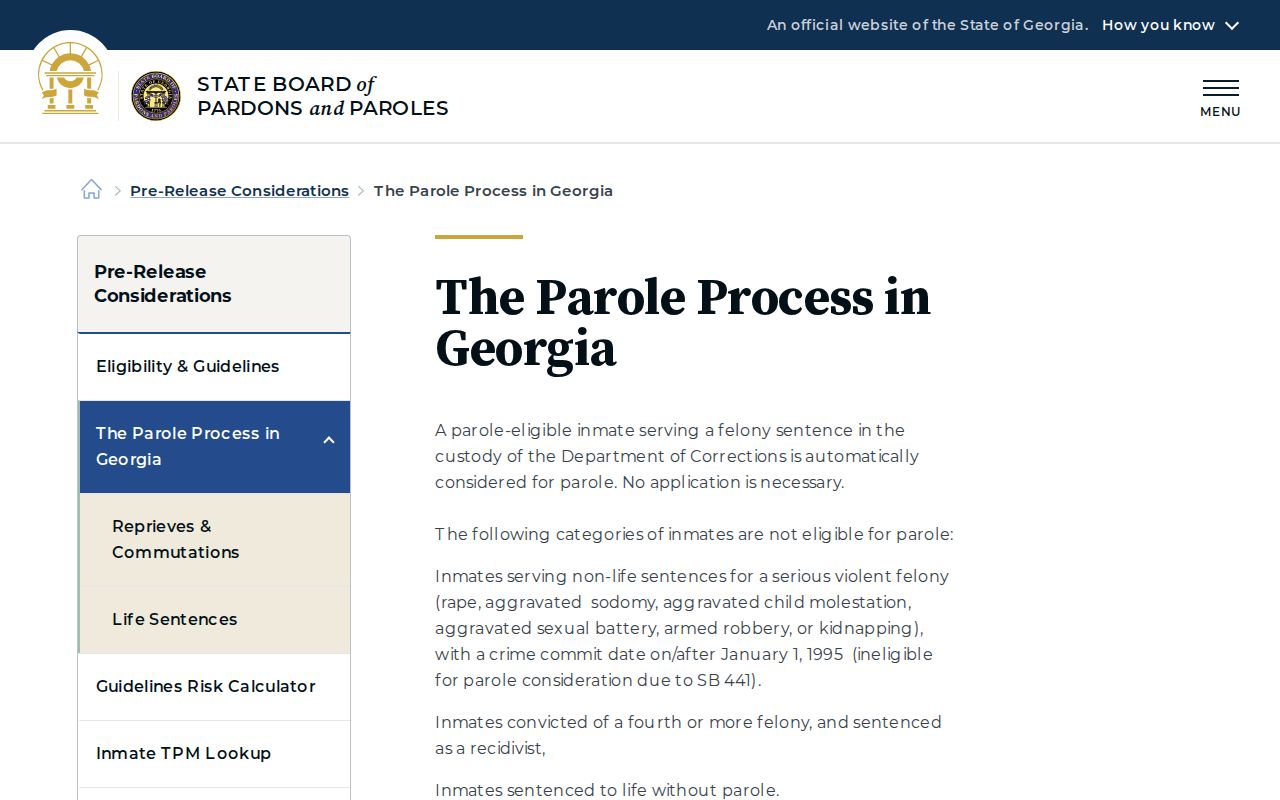
A Board decision is part of the release path, but eligibility or a guideline score alone does not create a release date.
Note: Record the date label, value, and check date so a later change can be traced to the right source.
Georgia's Three Release Measures
MRD, TPM, and PIC form Georgia's distinctive three-part vocabulary. MRD is the maximum prison-release calculation. TPM is the Board's tentative final-review month. PIC is an incentive mechanism that may move an eligible MRD or TPM. None can be swapped for another without changing the meaning of the record.
- Maximum Release Date
- The end point tied to the current prison sentence calculation.
- Tentative Parole Month
- A prospective Board review month, not a final parole promise.
- Performance Incentive Credit
- Earned points that may advance an eligible MRD or TPM under program rules.
- Actual Release Date
- The date a completed GDC custody exit is recorded in an inactive result.
The Board's TPM information page states the limits of a tentative month and links to the lookup.
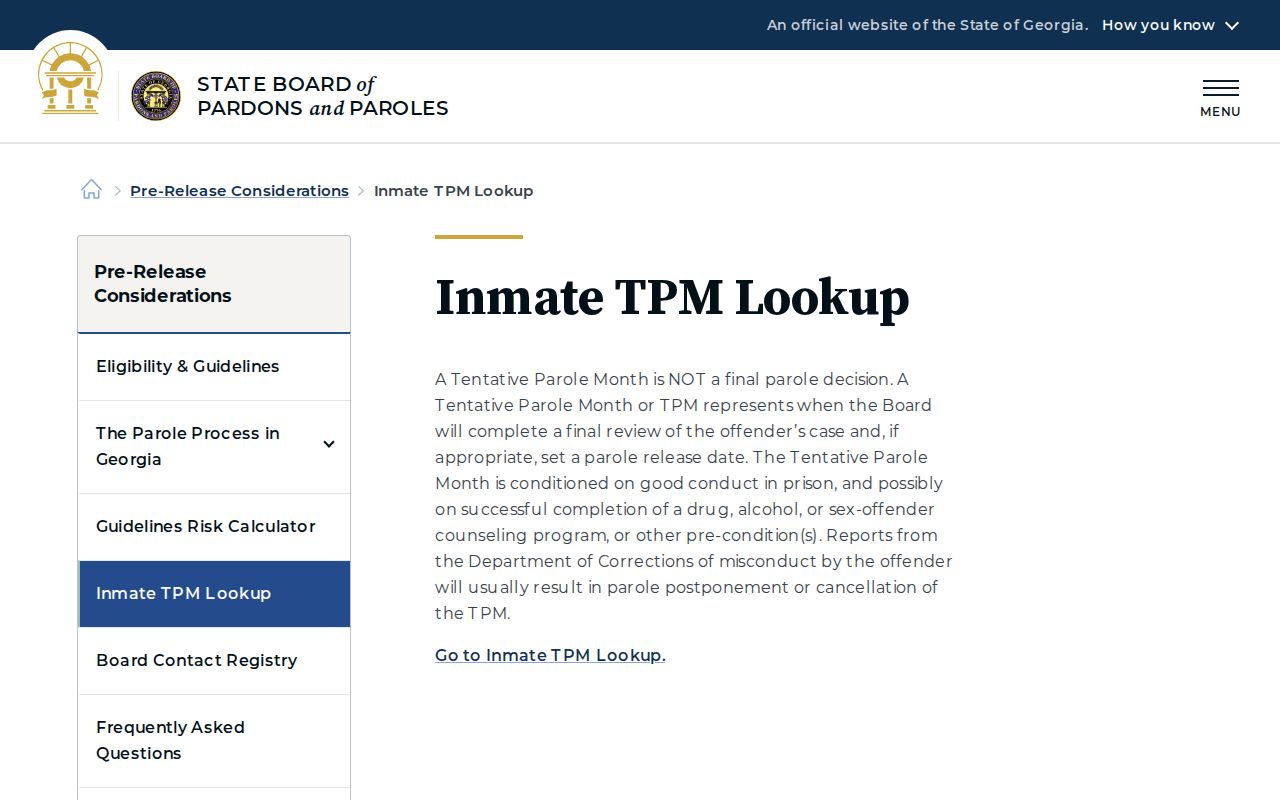
Read a TPM as a parole-review marker until the Board and GDC record an actual release action.
Read Georgia GDC Date Labels
A GDC detail can place past and future information in the same area. That layout makes exact transcription vital. CURRENT STATUS: ACTIVE paired with ACTUAL RELEASE DATE: CURRENTLY SERVING means the record does not yet document a completed GDC release. CURRENT STATUS: INACTIVE paired with a dated ACTUAL RELEASE DATE means the person is outside active GDC incarceration as reflected by the system. It does not identify the legal effect of every other term.
MAX POSSIBLE RELEASE DATE is a calculation field. TENTATIVE PAROLE MONTH comes from a different decision path. Sentence and incarceration-history rows can add the case, offense, conviction county, begin date, end date, and most recent institution needed to test whether the result matches the right person. Field availability varies. A photo or physical description can help distinguish names, but the GDC number, case number, birth information, and conviction data make a stronger combined match.
Absence also has limits. GDC expressly supports inactive searches, yet it gives no universal public retention period for all inactive records. GDC says records for people who complete a sentence under Georgia's First Offender Act are not published after completion. A failed search can also come from a name filter, a county-only custody event, or a record outside the public tool. It should not be turned into a claim that no custody event occurred.
When the public detail does not resolve the calculation, ask for the underlying public record. A precise request can seek the sentence computation sheet, custody and institutional history, recorded MRD, any release action, and the source order for a correction. Confidential or exempt parts may be withheld, but the request can ask for all segregable public portions.
Georgia County Release Calculations
A person serving a local jail sentence does not receive a GDC MRD or PIC calculation merely because the jail is in Georgia. The county jail applies the local sentence and any lawful county earned-time allowance. The court supplies the controlling sentence, amendments, bond orders, revocations, and jail-credit rulings. This split is crucial when a name disappears from a live jail roster.
Ask the jail records custodian for the admission date, sentence start, credited time, release date or estimate, release type, and destination. Then compare the sentencing docket. If the record says transfer to GDC, federal custody, ICE, or another county, the person left that jail but did not gain community release. For a county-only sentence, the local custodian remains the best source for imminent timing.
A state-prison search can still help after a county transfer. Once GDC receives and processes the person, the active offender detail may show the state sentence information. Processing can take time, so a temporary gap between systems is not proof of release.
Local earned time also must not be projected from a statewide rule of thumb. O.C.G.A. § 42-4-7 allows a county allowance based on institutional behavior, but the statute makes the post-July 1, 2000 allowance nonautomatic. The jail can explain whether an allowance was granted and how it was applied. The court can resolve whether the sentence itself changed.
Confirm Georgia Actual Release
Use the GDC release-date guidance to identify the official channel for facility, charge, and date questions.
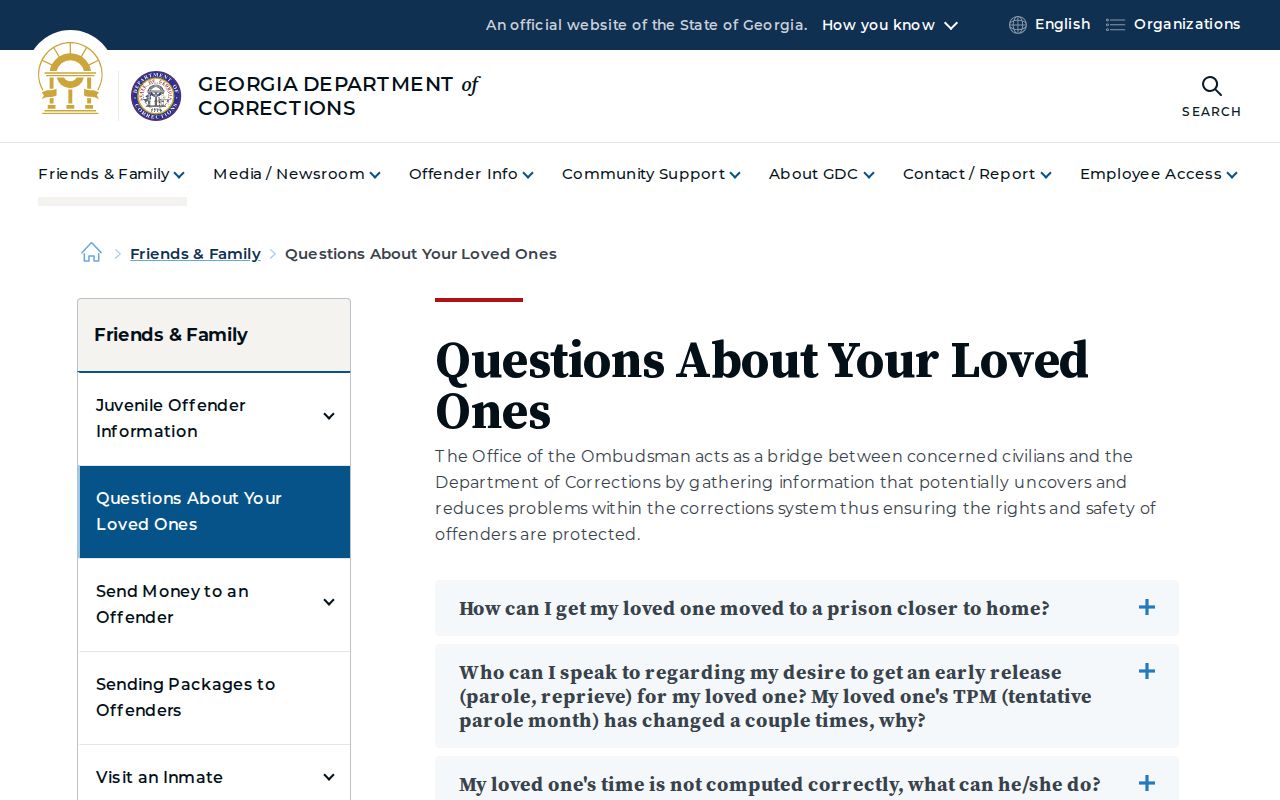
The guidance reinforces that the public search is a starting point and that record-specific facts belong with GDC.
For a state prisoner, compare the GDC detail with the TPM Lookup when parole is involved. An inactive record with CURRENT STATUS: INACTIVE and a dated ACTUAL RELEASE DATE confirms that GDC active incarceration ended as reflected in the system. It does not by itself prove that parole, probation, or every other legal duty ended. Check the Parolee Database, the Georgia Department of Community Supervision, and the sentencing court when post-release status matters.
For advance notice, the Georgia VINE specific-person route can send custody-change alerts when the reporting feed supports them. The full registration process appears under VINELink Inmate Search. VINE data can lag and is not a certified release order. An imminent pickup or transfer should be confirmed with the custodian.
If an online record is missing or conflicting, submit a narrow GDC open-records request. Include the full name, GDC ID if known, birth date, conviction county, case number, and approximate custody dates. Ask for the public portions of the sentence computation, institutional history, release action, actual release date, release type, and destination. Under Georgia's Open Records Act, the agency generally must produce responsive records within three business days or explain the timetable, cost, and lawful basis for any withheld part.