
Georgia Released Inmate Records
“Released” describes the end of one custody event. It does not always mean that all legal control has ended. A person may leave a Georgia county jail on bond, recognizance, dismissal, time served, completion of a local sentence, or a court order. Another person may leave that jail only because GDC, a federal agency, ICE, or another county took custody. A transfer removes the name from the first roster but is not a community release. The sound record therefore identifies the date and time, release reason, releasing authority, and destination when one exists.
State-prison terms use different words. Parole permits part of an eligible prison term to be served in the community under conditions. A maxout is release after service to the maximum of the prison sentence under the valid calculation. Discharge generally means the applicable supervision duty or sentence has ended through an order or certificate. The Georgia Department of Corrections identifies the state system and maintains records for sentenced prisoners. County sheriffs keep their own jail events, and courts preserve the orders that may explain those events.
| Event | What it means | Primary record |
|---|---|---|
| Bond or recognizance | Release from local pretrial custody under court terms | County jail release and court order |
| Time served or local sentence end | County confinement ends under the sentence | Jailer and sentencing court |
| Parole | State prison ends while supervised service continues | GDC, Parole Board, and DCS |
| Maxout | Prison sentence reaches its calculated maximum | GDC release record |
| Transfer | Custody moves to another authority | Sending and receiving agencies |
A release type must be read with its destination. “Conditional transfer” and an institution-to-institution move are custody changes, while bond or sentence expiration may end physical confinement. Death also appears as an administrative release type in GDC statistics. These distinctions keep statewide totals and individual records from being described more broadly than the source permits.
Georgia Release Record Fields
A useful Georgia release record is more than a roster disappearance. At the county level, ask for the booking number, admission date and time, release date and time, release reason or type, bond or court authority, and destination or receiving agency if the event was a transfer. Names and dates of birth help separate people with similar names. The court file may supply a bond order, dismissal, sentence, revocation, or discharge order, yet the jail record remains the better source for the physical exit timestamp.
GDC uses its own public labels. An inactive detail may show CURRENT STATUS: INACTIVE and a dated ACTUAL RELEASE DATE. The same record can display a GDC number, identifying data, photograph when available, offense and sentence rows, conviction county, most recent institution, incarceration history, MAX POSSIBLE RELEASE DATE, and TENTATIVE PAROLE MONTH. Fields vary. The public search warns users to verify information with Inmate Records and Information, so an online detail is a lead rather than a certified document.
| Field | What it establishes |
|---|---|
| Booking or GDC number | A system-specific identifier for the custody record |
| Release date and time | When the recorded custody event ended |
| Release type or reason | Bond, sentence end, parole, transfer, or another coded action |
| Releasing facility | The jail or institution that processed the action |
| Destination | Community release or transfer to another custodian, when recorded |
| Supervision information | Whether parole or probation may follow confinement |
The official GDC offender-search form shows how active and inactive scopes are separated.
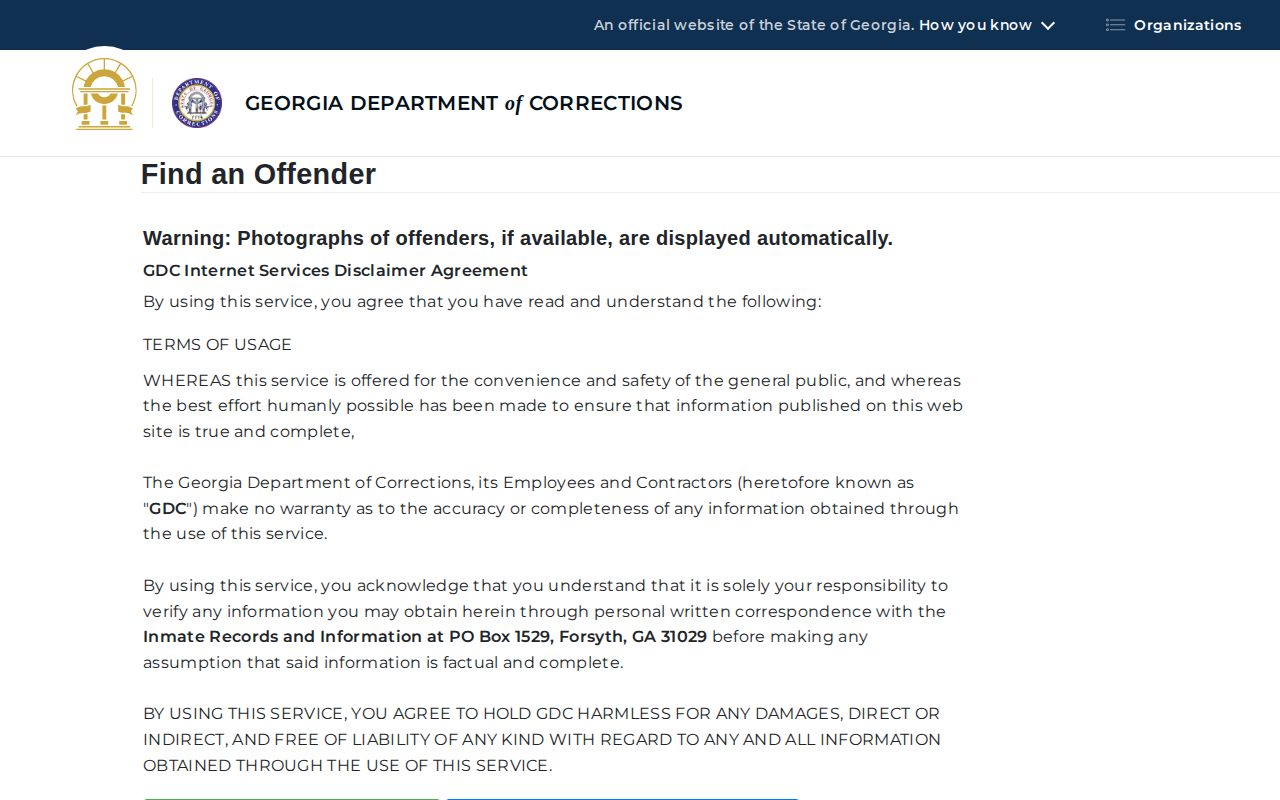
Choosing inactive or all offenders is essential when a released state prisoner no longer belongs in the active-incarceration filter.
Request Georgia Release Records
Georgia has no single custodian for every release. Start with the agency that held the person. For a county event, use the Georgia County Directory to reach the proper local release path. For a state-prison event, use the GDC Open Records Request page. A narrow request should give the full name, date of birth if known, GDC or booking number, conviction county, and approximate dates. Ask for specified public fields instead of an unrestricted institutional file. That focus reduces confusion and helps the custodian locate responsive material.
- Identify whether the event involved a county jail, GDC prison, federal prison, or ICE custody.
- Provide the person’s name, identifier, date of birth if known, and a useful date range.
- Request admission, release, release-reason, sentence, transfer, and supervision fields that fit the event.
- Ask for segregable public portions if exempt or confidential material appears in the same file.
- Compare the response with the court order and current supervision source when the dates or labels differ.
Under the Georgia Open Records Act, O.C.G.A. §§ 50-18-70 through 50-18-77, the custodian generally must produce responsive records within three business days or explain the records, legal basis for withholding, production timetable, and estimated cost. Authorized search, retrieval, redaction, and copy costs may apply. Medical, security-sensitive, victim, confidential parole-file, juvenile, sealed, restricted, or other exempt material can be withheld or redacted.
Record scope matters. Ask for the jail’s physical release timestamp and the court’s legal order separately. Each answers a different question.
Search Georgia Released Inmates
The best statewide path starts with the custody type. GDC is the primary online source when the person served a Georgia state-prison sentence. A person held only in a county or municipal jail may never appear there. If a county booking ended in a transfer to state prison, leaving the county roster is not a release. For a federal conviction, BOP controls the locator record. ICE has a separate short-window detainee search. VINE provides status and notification functions but is not a complete historical archive.
- Use GDC for a sentenced state prisoner and select inactive or both active and inactive records.
- Use the county that held a local detainee and request its historical release entry.
- Check the sentencing court for the order that explains bond, dismissal, sentence, or discharge.
- Use the Parolee Database and DCS sources when supervision may follow release.
- Use BOP or ICE only when the person was in that federal custody system.
The GDC agency home identifies the state prison authority and links its offender resources.
That state layer must be kept separate from Georgia’s locally operated jail records.
GDC Georgia Offender Search
The GDC Find an Offender application begins with a disclaimer. Search fields include partial first and last name, GDC identification number, and case number. Its detailed form adds gender, race, age range, recent institution, aliases, physical descriptors, scars or marks, sentence status, primary offense, conviction county, and photo preference. For a difficult name search, GDC recommends entering the first four letters of the surname and choosing all offenders. A known GDC number is more precise.
After opening a result, compare date of birth, physical description, conviction county, case number, offense, and institution before deciding it is the same person. “Inactive” means not currently incarcerated within GDC’s search scope. It is not proof that probation, parole, a warrant, or another custody status ended. First Offender Act records are not published after successful sentence completion, and GDC gives no universal public retention period for other inactive profiles. Absence may also reflect a filter mismatch or county-only custody.
| Search choice | Best use | Important limit |
|---|---|---|
| Only active | Current GDC incarceration | Omits inactive released profiles |
| Only inactive | People not currently incarcerated by GDC | Does not prove all supervision ended |
| Both active and inactive | Uncertain status or hard-to-find records | Requires careful identity comparison |
| Released in past 15 days | Recent state-prison releases | Short window, not a county release feed |
Georgia County Release Trails
Georgia’s 159 counties do not publish release history in one uniform way. The county research corpus includes official vendor rosters with prior-inmate switches, current-only feeds, app-based views, and counties without a verified public roster. Urban and rural systems can expose different fields and different historical windows. This is why a statewide name search cannot replace the jailer’s record. When the correct roster lacks a past entry, the common fallback is a focused records request plus the court disposition.
A live jail roster answers who is held now. It often removes a name once release processing finishes. The historical release entry, jail log, or records response answers what happened earlier. If the person moved to GDC, use the state offender search next. If the county cannot be identified, begin with the court case or known arrest location and work back to the jailer. The facility name also helps because regional and contract placements can cross county lines.
Georgia Release and Supervision
Release and discharge are not synonyms in Georgia. Since July 1, 2015, the Georgia Department of Community Supervision has supervised adult felony probationers and parolees. The State Board of Pardons and Paroles still makes parole decisions. Probation is imposed by a court; parole is the Board’s conditional release from a prison term. A GDC profile can become inactive while DCS supervision remains active, so check the public Parolee Database, sentencing order, and relevant DCS field office.
The official Georgia Parolee Database is the public parole-record layer for someone already released.
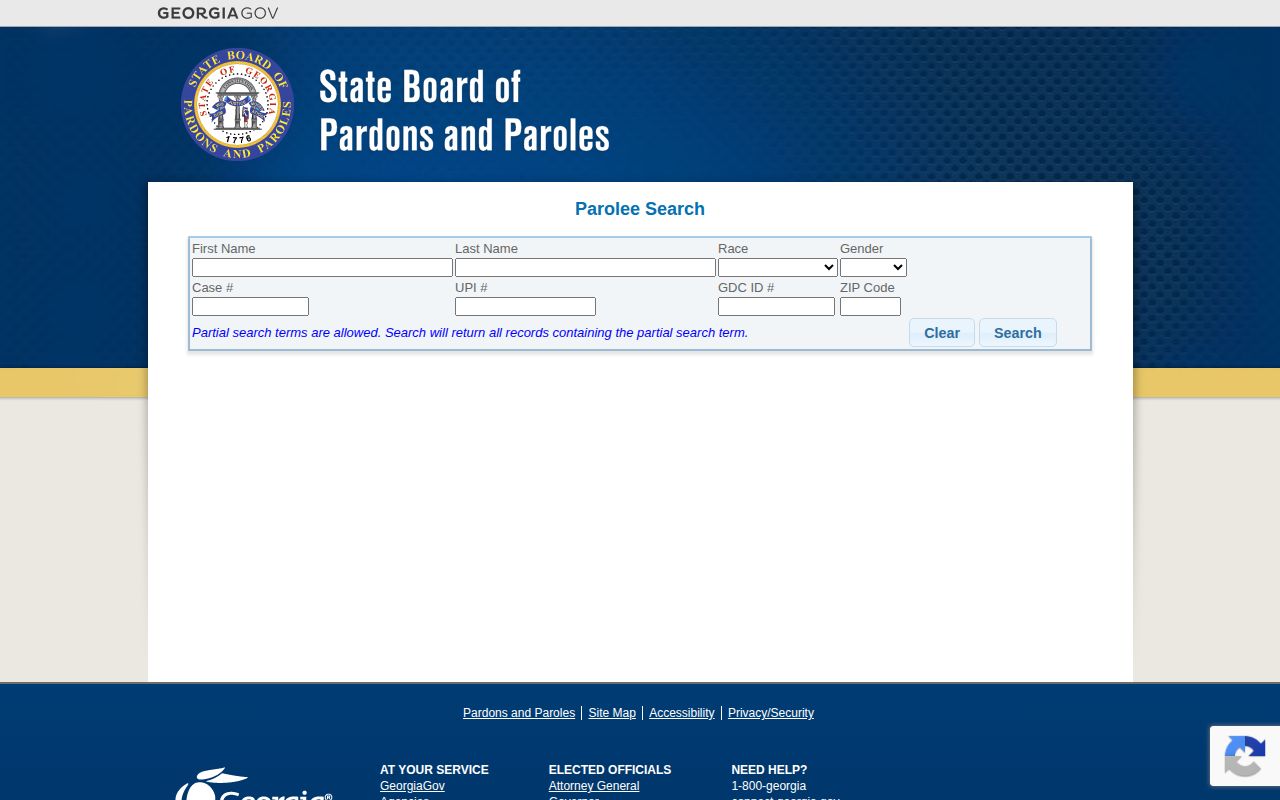
A past end date is useful, but a discharge order or completion certificate is stronger proof that supervision ended.
The Georgia parole process also explains why a prospective decision can change before actual release.
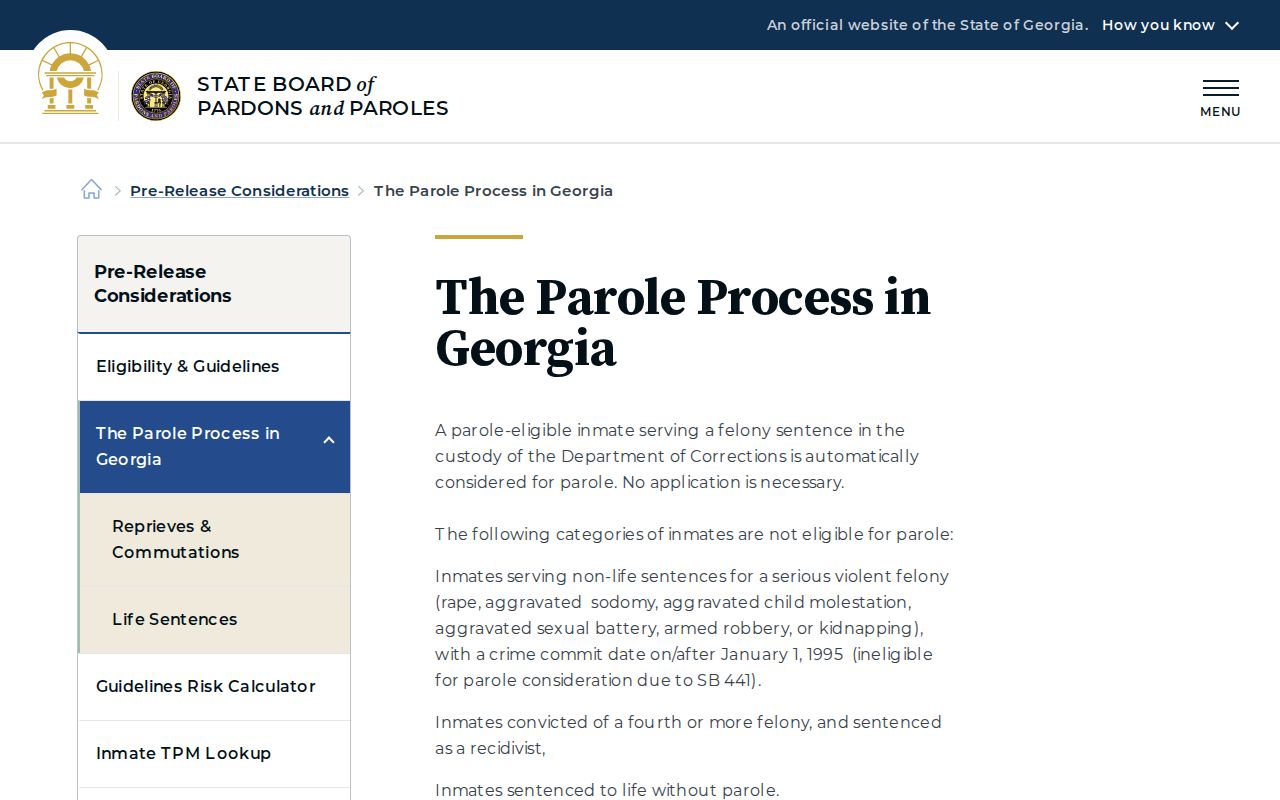
Residence verification, conduct, programs, detainers, and new information can affect an anticipated parole action.
Georgia VINE Release Status
Georgia VINE is a specific-person status and notification channel. Search by name or available identifying details, verify the reporting agency, and open the notification option if a later custody change matters. Delivery choices come from the live record and may require a PIN or other confirmation step. Keep the registration details. VINE is not a full archive of every old release, and a missing or stale record should be checked against the jail, GDC, court, or DCS.
The Georgia VINE person search shows the statewide person-search route.
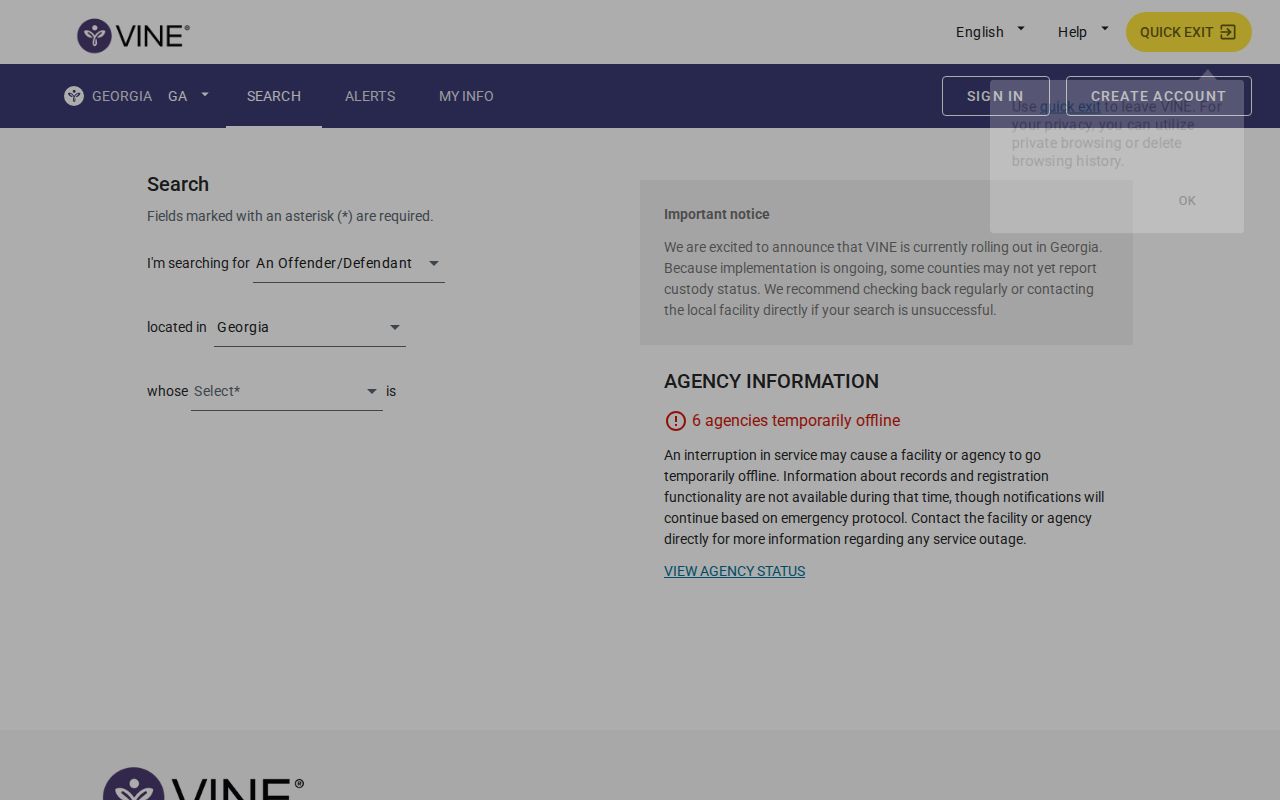
The reporting agency and custody status must match the person and facility being researched.
Georgia Court Release Records
Georgia Courts eAccess is a statewide router, not one complete docket. It points toward electronic court access, while re:SearchGA serves participating courts and may vary in accounts, images, availability, and fees. The Superior Court Clerks’ Cooperative Authority offers clerk routing and selected indexes. When a portal lacks the bond, dismissal, sentence, revocation, or discharge order, request it from the clerk that handled the case.
The official Georgia Courts eAccess hub illustrates that routing function.
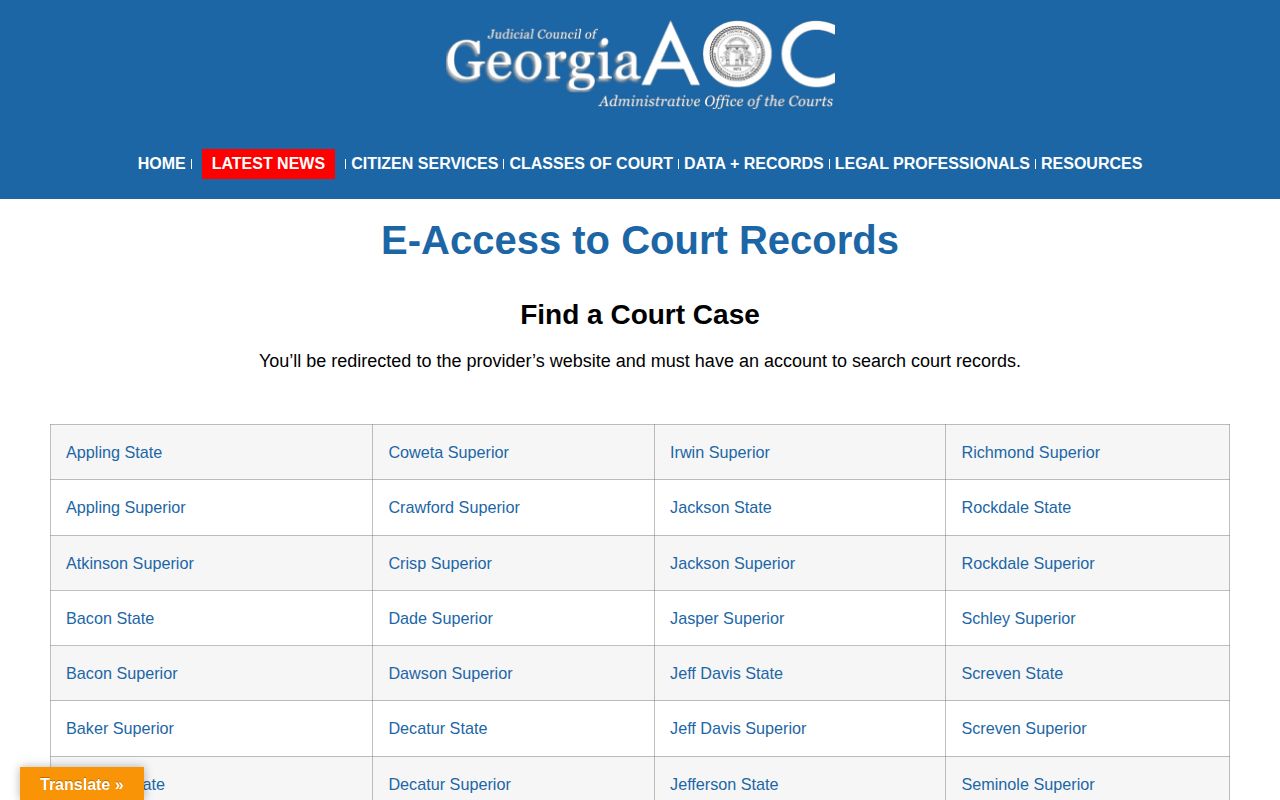
Court events can explain a custody change, but the jail supplies the actual exit timestamp.
The participating-court re:SearchGA portal is one electronic path within that broader structure.
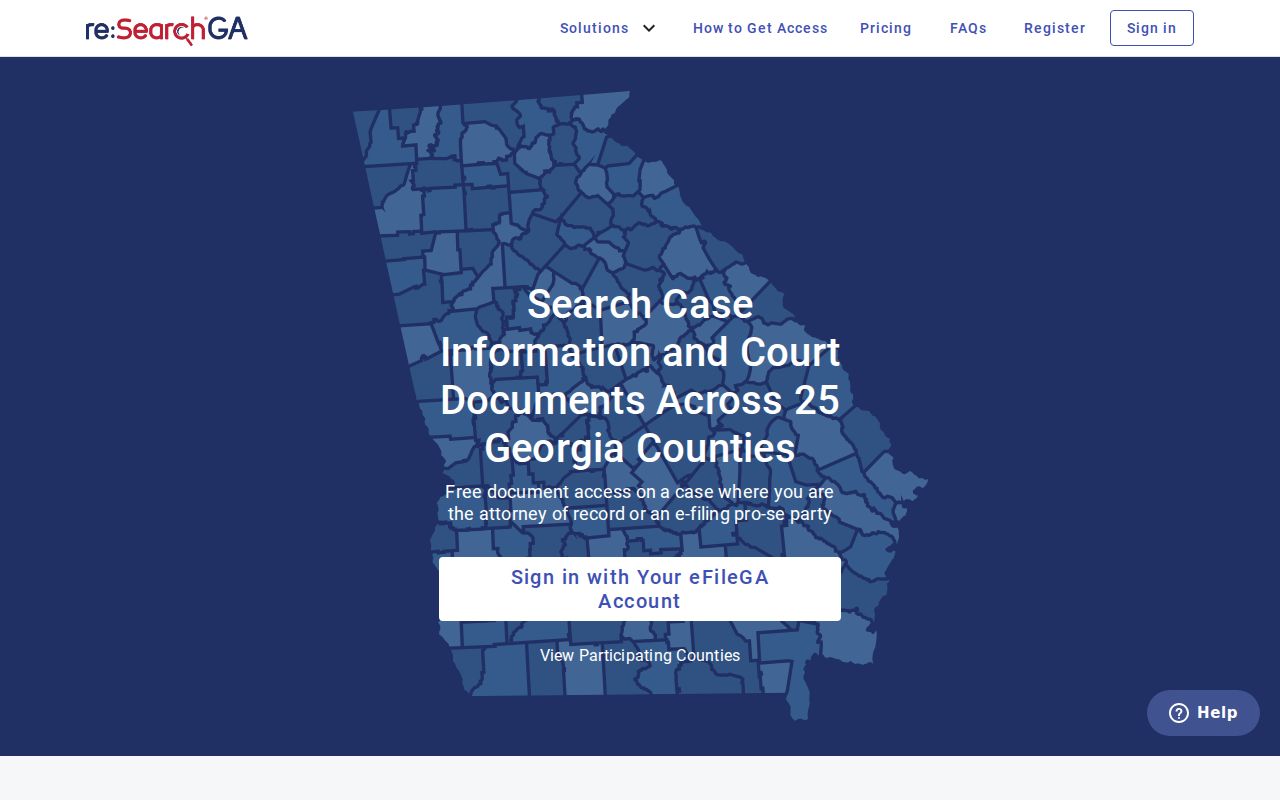
A clerk request remains necessary when the relevant court or document is not available through the portal.
Georgia Federal Release Searches
The Bureau of Prisons Inmate Locator applies to federal prisoners, not Georgia county or GDC cases. It covers federal inmate records from 1982 onward. A record may show a release date and “Released” or “Not in BOP Custody.” That phrase means only that BOP no longer holds the person. Another correctional, law-enforcement, parole, or supervised-release status may exist, and a federal pretrial detainee held for the U.S. Marshals may not yet have the same BOP profile.
The official BOP Inmate Locator is the correct federal-prison search.
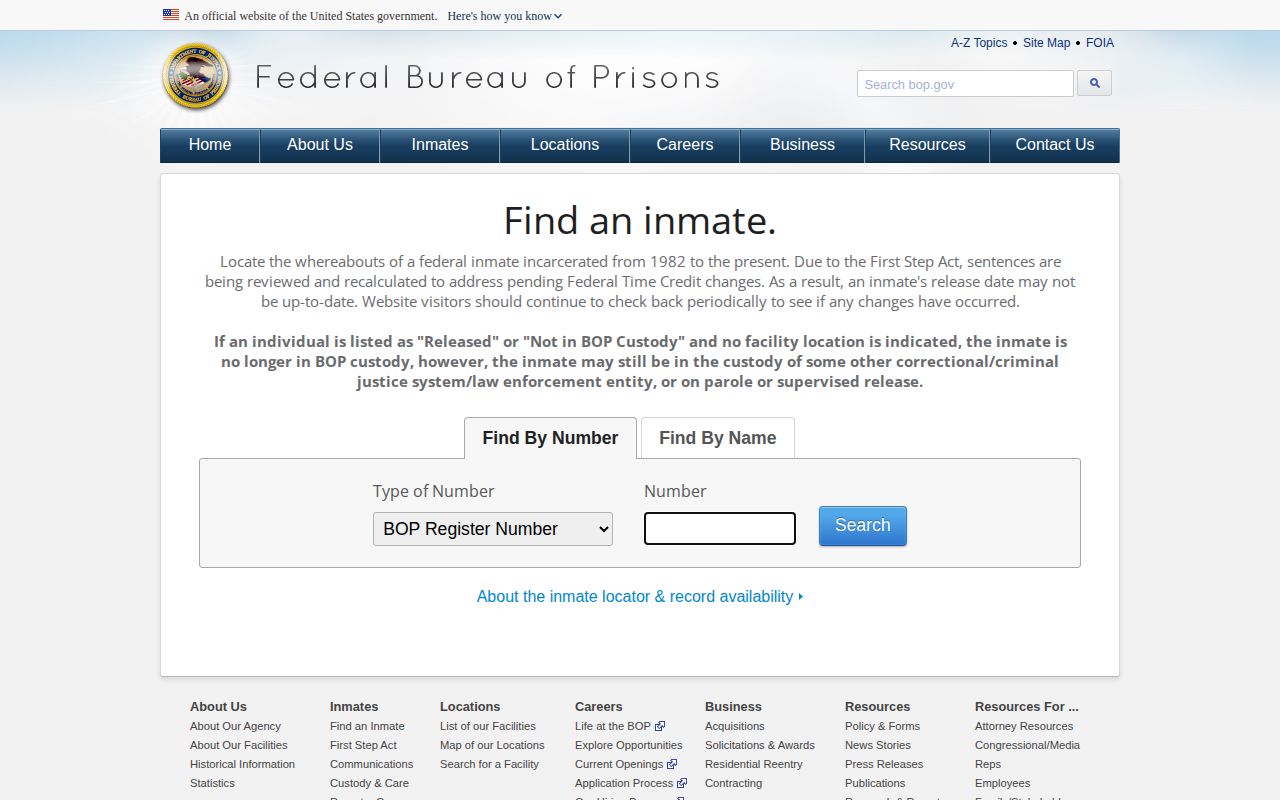
Read its release label narrowly and verify any later status with the proper authority.
ICE’s Online Detainee Locator System is separate. It searches by A-number and country of birth, or by exact name and country of birth with an optional birth date. ICE states that its public locator includes people currently detained or released from ICE custody within the past 60 days. It is a short-window immigration-custody check, not a Georgia criminal release archive.
Georgia State Release Trends
GDC’s FY2025 profile counted 13,523 release records from July 1, 2024 through June 30, 2025. The administrative categories included 7,640 sentence expirations, 4,033 parole certificates, 707 conditional transfers, 408 supervised reprieves, 282 out-of-state parole orders, 128 out-of-state conditional transfers, and 325 deaths. The word “release” in that report therefore includes events that are not release to the community. Read each category before using the total.
The August 7, 2026 Friday Report recorded 1,185 July 2026 releases: 539 clemencies, 611 maxouts, and 35 other releases. It classified 1,083 as supervised. The report is a weekly warehouse extraction, so recent monthly totals can settle as late information arrives. GDC’s Friday Report series supplies the current trend, while annual profiles provide a stable cohort view.
Georgia Release Card Funds
GDC documents a Georgia Release Card for money left in an inmate account when the person leaves custody. Its guidance says remaining funds “on your books” transfer to the card, and the agency provides activation and account information. That is an account-disbursement method. It is not proof that each released prisoner receives a fixed state cash grant. The reviewed official material does not establish one universal gate-money amount, clothing package, or bus ticket entitlement.
Use the GDC Georgia Release Card page for current instructions. Release logistics can change, so confirm card activation and access details through that official route. A transitional center or work-release placement is still a correctional placement and does not by itself show final discharge.
Georgia Release Photos and Law
A booking photograph records an earlier arrest event. It does not prove current custody, release, guilt, or supervision. Georgia has two relevant layers of law. O.C.G.A. § 35-1-19 limits law-enforcement website posting and certain disclosures of booking photographs. O.C.G.A. § 10-1-393.5 addresses commercial publication and removal conduct, which the Attorney General’s Consumer Protection Division explains through an official consumer page.
These rules help explain why a sheriff site may not show the image a reader expects. Status, date, and releasing-authority records are stronger proof of release. Juvenile, sealed, restricted, confidential, or successfully completed First Offender material may also be unavailable through public tools. Absence should be investigated through the correct custodian, not treated as proof that no custody event occurred.
Georgia Custody Search Map
Use the record system that matches the custody layer. A live roster is for current confinement. Historical release records, inactive GDC profiles, court orders, parole records, and federal locators each answer narrower questions.
| Situation | First source | What confirms release |
|---|---|---|
| County jail | Sheriff or jailer | Release timestamp, reason, and destination |
| Georgia state prison | GDC offender search | Inactive status and actual release date, then official record |
| Parole | Parolee Database and DCS | Parole record and later discharge document |
| Federal prison | BOP locator | Release label and date within BOP’s scope |
| ICE custody | ICE ODLS | Current or recent ICE status within its window |
The statewide Georgia Facility Directory identifies the facility type and links covered locations to their county pages. Uncovered facilities remain listed without invented links.